Table of Contents
- What Surgical Demolition Means for Your Remodel
- Surgical vs. Traditional Demolition: Key Differences
- When to Choose Surgical Demolition Over Traditional Methods
- Selective Interior Demolition Techniques for Structural Remodels
- Dust Control Measures for Home Remodeling Projects
- Cost of Surgical Demolition vs Traditional Demolition
- Safety Protocols and Site Protection During Surgical Demolition
- Tools and Step-by-Step Process for Precision Removal
- Frequently Asked Questions
Last Updated: September 20, 2026
What Surgical Demolition Means for Your Remodel
Surgical demolition is the practice of removing only the specific parts of a home that need to go, while leaving everything else untouched and protected. This guide from Remodeling Pros covers how it works and when it makes sense for your project.
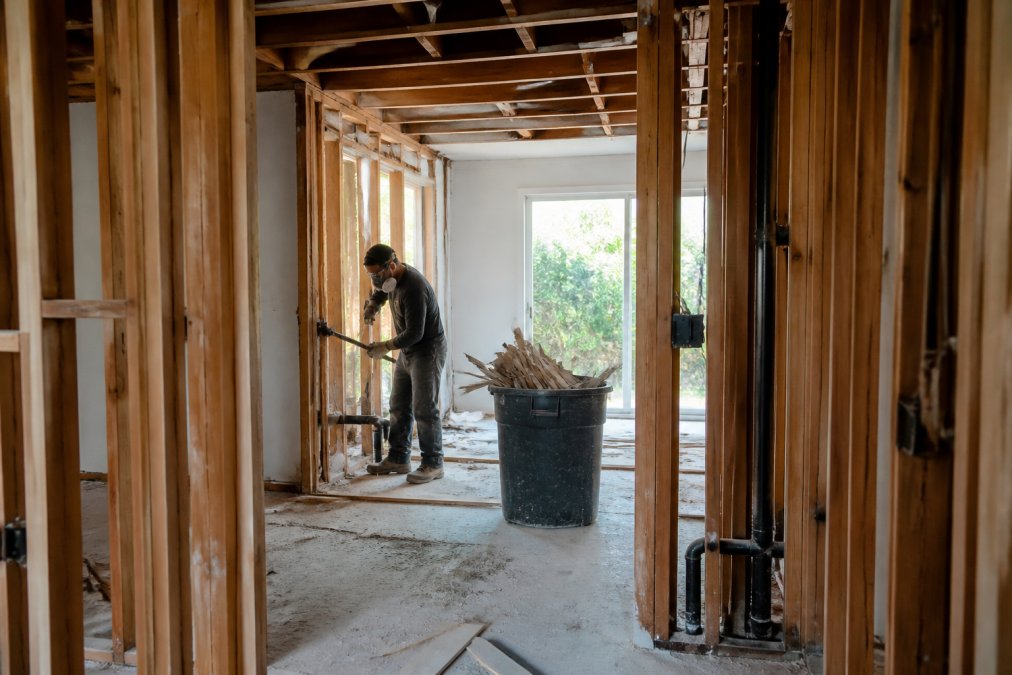
It is the opposite of swinging a sledgehammer first and asking questions later. Instead, crews cut precise openings, brace what stays, and treat your home like a patient on an operating table.
The payoff is real. Families often stay in their homes during structural work, and the original structure holds until the last moment. Below, we break down the techniques, tools, and safety steps that make it possible.
Surgical vs. Traditional Demolition: Key Differences
Traditional demolition clears space fast. Surgical demolition protects value while it clears space.
The difference shows up in three places:
- Scope: Traditional tear-out removes whole rooms. Surgical removal targets one wall, one floor, or one fixture.
- Protection: Surgical work seals off dust, covers floors, and braces nearby framing.
- Timeline: Traditional demolition is quicker per room but adds rebuild time later.
A typical example: removing a wall between a kitchen and dining room. A traditional crew knocks out everything and rebuilds. A surgical crew opens only the wall line, keeps the cabinets, and saves the sub-floor.
Surgical demolition often costs less overall, because you rebuild less and replace fewer finishes.
When to Choose Surgical Demolition Over Traditional Methods
Choose surgical demolition when part of the home must survive the project. That covers most remodels where families stay in place.
Reach for it when:
- You are removing a wall, not a whole room
- You want to keep hardwood floors, cabinets, or tile
- The home is older and has framing you cannot easily replace
- You plan to live in the house during construction
Traditional demolition still wins for full gut jobs. If every surface is coming out anyway, precision removal adds cost for no benefit.
A common mistake is choosing surgical methods for a full strip-out. The extra care slows the crew without saving anything.
Selective Interior Demolition Techniques for Structural Remodels
Selective interior demolition is the craft of taking out one layer of a home while leaving the rest intact. It starts with a plan, not a pry bar.
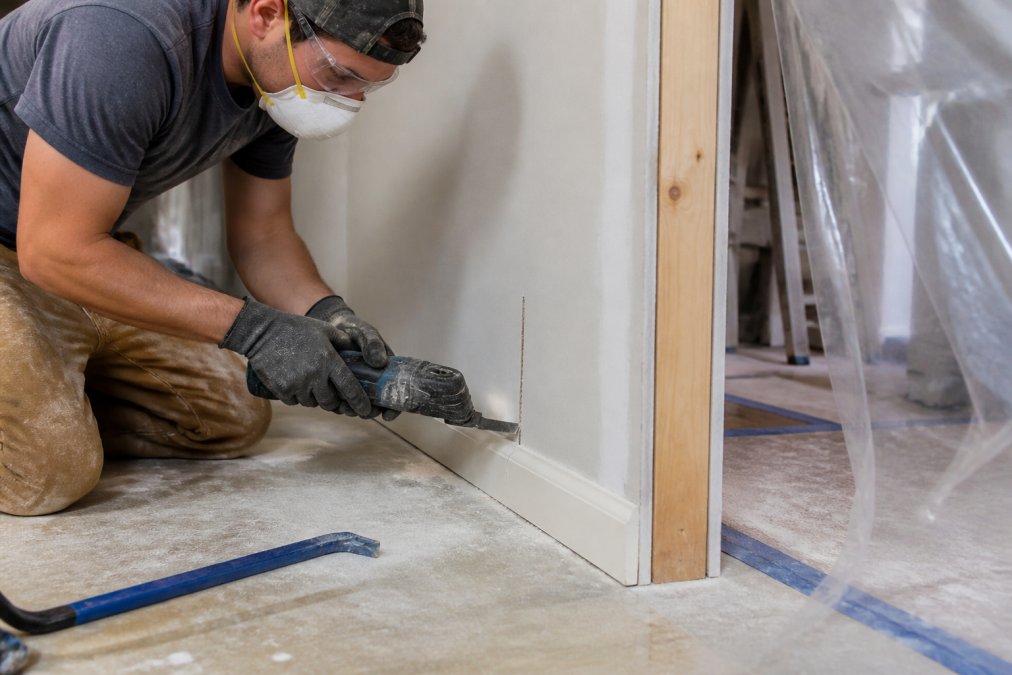
Crews score drywall along cut lines before pulling it. They cut fasteners instead of ripping them.
Identifying Load-Bearing Walls and Structural Framing
Load-bearing walls carry weight from above. Removing one without support can crack ceilings, sag floors, or worse.
Before any cut, check these signs:
- The wall runs perpendicular to floor joists
- It sits directly above a beam or foundation wall
- It has a double top plate or larger framing members
Never remove a wall you have not confirmed is non-load-bearing. The consequence is not a cosmetic crack; it can mean a partial structural failure.
Dust Control Measures for Home Remodeling Projects
Dust control measures for home remodeling keep fine particles out of the air your family breathes. They also protect electronics, HVAC systems, and finishes in rooms you are keeping.
The basics work well:
- Seal doorways with plastic zipper barriers
- Cover vents and returns in the work zone
- Run a HEPA air scrubber inside the sealed area
- Mist surfaces before cutting to weigh down dust
- Bag debris inside the zone, then carry it out
Cost of Surgical Demolition vs Traditional Demolition
The cost of surgical demolition vs traditional demolition depends on scope, access, and how much you plan to save. Pricing varies widely by project, so we quote each job after a walkthrough.
What drives the number up or down:
| Factor | Surgical Demolition | Traditional Demolition |
|---|---|---|
| Labor hours | Higher per room | Lower per room |
| Rebuild cost | Much lower | Higher |
| Material salvage | Common | Rare |
| Dust and protection | Extensive | Minimal |
| Best for | Partial remodels | Full gut jobs |
Safety Protocols and Site Protection During Surgical Demolition
Safety protocols and site protection during surgical demolition start before the first cut. The goal is simple: keep people safe and keep the rest of the house working.
Core steps:
- Shut off power, water, and gas to the work zone
- Brace adjacent framing before removing supports
- Set up dust barriers and floor protection
- Keep a fire extinguisher and first-aid kit on site
- Wear PPE: eye protection, gloves, masks, and hearing protection
Hazardous Material Mitigation and Utility Shut-Off
Hazardous material mitigation comes first, before any demolition begins. Older homes may contain asbestos in floor tile, insulation, or joint compound, and lead paint in homes built before 1978.
A practical pre-demo hazard checklist:
- Asbestos: Suspect in 9-inch floor tiles, popcorn ceilings, pipe insulation, and joint compound in homes built before the 1980s. Asbestos-containing materials are only dangerous when disturbed, cutting, sanding, or breaking them releases fibers.
- Lead paint: Assume lead paint in any home built before 1978. The EPA’s Renovation, Repair and Painting (RRP) Rule requires certified firms and lead-safe work practices for many pre-1978 renovations (the EPA). Test kits are available at hardware stores, but a certified inspector provides definitive results.
- Mold: Look for musty odors, water stains, or past leaks. Mold behind drywall or under flooring is common in bathrooms and basements. Disturbing mold without containment spreads spores through the house.
- Other hazards: Check for PCB-containing caulk in homes built between 1950 and 1978, and for mercury in old thermostats or switches.
Mitigation workflow:
- Test suspect materials before any demolition.
- If positive, hire a licensed abatement contractor, do not attempt removal yourself.
- Seal the work zone with negative air pressure and HEPA filtration.
- Dispose of hazardous waste at a licensed facility, not in your regular dumpster.
- Document clearance testing before remodeling resumes.
Never cut into suspect materials to “see what’s inside.” Disturbing asbestos or lead paint can create a health hazard that costs far more to remediate than to prevent.
Tools and Step-by-Step Process for Precision Removal
Precision removal follows a fixed order. Skip a step and you risk damage you cannot undo.
Tool-Specific Techniques for Minimizing Vibration and Collateral Damage
Hand tools (low vibration, high control):
- Oscillating multi-tool: The workhorse for surgical demolition. Its small blade oscillates rather than spins, so it cuts drywall, trim, and nails with minimal vibration. Use a fine-tooth blade for clean edges and a carbide blade for nails.
- Pry bar and flat bar: For prying trim, baseboards, and cabinets without gouging the wall behind. A wide flat bar spreads force over a larger area, reducing dents.
- Utility knife: Score drywall along cut lines before pulling. Scoring prevents ragged edges and reduces dust.
- Hand saw: For cutting through nails or small framing members where a reciprocating saw would vibrate too much.
Power tools (higher vibration, use with care):
- Reciprocating saw: Fast for cutting nails and framing, but its aggressive stroke can crack plaster and shake loose tiles in adjacent rooms. Use a fine-tooth blade and let the tool do the work, do not force it.
- Circular saw: For cutting sub-floor or plywood. Set blade depth just past the material thickness to avoid cutting into joists below.
- Rotary hammer: Only for concrete or masonry. Avoid on interior walls where vibration travels.
Vibration control tips:
- Cut fasteners instead of prying them, prying transfers force into the structure.
- Support the material being removed so it does not fall and damage what stays.
- Work in small sections and check adjacent finishes after each cut.
- In older homes, consider using a vibration dampening pad behind the tool.
The process:
- Confirm the scope and mark cut lines
- Shut off and tag utilities
- Seal the work zone with dust barriers
- Protect floors and nearby finishes
- Score and cut drywall along the lines
- Cut fasteners instead of prying them loose
- Remove debris in bags, not loose piles
- Inspect framing and sub-floor for damage
- Prep the site for the next phase
Label and stack salvageable materials as you go. Trim, doors, and fixtures you save can often go right back in, which cuts both cost and waste.
Debris management and waste disposal run alongside the whole process. A dumpster rental sized to the job keeps the site clear and the crew moving.
Frequently Asked Questions
How does surgical demolition help maintain property use during construction?
Surgical demolition isolates the work area so the rest of your home stays functional. Contractors build temporary dust walls, seal HVAC vents, and remove only what is necessary. This means your kitchen, bathrooms, and bedrooms remain usable while structural work happens. The original structure stays intact until the final phase, so you avoid the disruption of a full teardown. Many homeowners continue living at home throughout the project, which also saves on temporary housing costs.
Is surgical demolition more cost-effective than full-scale demolition?
Surgical demolition often costs less overall because you avoid rebuilding parts of the home that are still sound. Selective removal typically reduces debris disposal fees, landfill charges, and the need for temporary housing. It also preserves salvageable materials like hardwood floors or cabinetry that can be reused or donated.
What tools are required for precision interior demolition?
Common tools include an oscillating multi-tool for flush cuts, a reciprocating saw for framing, pry bars for trim removal, and a dust extraction system. Contractors also use zip walls, HEPA vacuums, and negative air machines for dust containment. For safety, PPE like goggles, N95 respirators, and gloves are mandatory. The exact tool list depends on what you are removing, but these cover most selective interior demolition techniques for home remodels.
How do contractors protect existing structures during surgical demolition?
Protection starts with a structural integrity assessment to identify load-bearing walls and vulnerable connections. Contractors install temporary supports, cover floors with heavy-duty protection, and seal off adjacent rooms with plastic barriers. Dust control measures include negative air pressure and HEPA filtration. Utilities are shut off before work begins, and hazardous materials like asbestos are abated by licensed professionals. This careful approach minimizes collateral damage and keeps the rest of your home safe.