Table of Contents
- Quick Comparison: Top Home Addition Builders in Jacksonville
- How to Choose a Contractor for a Home Addition
- Remodeling Pros: Full-Service Additions With 3D Design
- Indoor Home Enhancers: Versatile General Contracting
- Cowford Cabinetry & Design: Custom Cabinetry and Interiors
- Cutillas Custom Marble: High-End Stone Finishes
- Bo & Rose Homes: Collaborative Custom Builds
- Thumbtack, Houzz, and BuildZoom: Contractor Marketplaces
- Frequently Asked Questions
Last Updated: September 23, 2026
Quick Comparison: Top Home Addition Builders in Jacksonville
The best home addition builders in Jacksonville combine licensed general contracting, transparent timelines, and a design process that shows you the finished space before demolition starts. Remodeling Pros leads this list because its Last Day Breakthrough system keeps your existing structure intact until the final stage, so your family can stay home during construction.
| Builder | Best For | Standout Strength | Pricing |
|---|---|---|---|
| Remodeling Pros | Full-service additions, occupied homes | Last Day Breakthrough, 3D design | Quote-based |
| Indoor Home Enhancers | Kitchen and bath remodels | Versatile general contracting | Quote-based |
| Cowford Cabinetry & Design | Custom cabinetry and interiors | Design-build cabinetry | Quote-based |
| Cutillas Custom Marble | Luxury stone finishes | Marble and stone fabrication | Quote-based |
| Bo & Rose Homes | Collaborative custom builds | Personalized communication | Quote-based |
| Thumbtack | Comparing multiple quotes | Large local contractor pool | Free to browse |
| Houzz | Visual inspiration | Project photo galleries | Free to browse |
| BuildZoom | Permit-data research | Historical permit records | Free to browse |
How to Choose a Contractor for a Home Addition
Choosing a contractor for a home addition starts with verifying three things: a current state license, general liability and workers’ compensation insurance, and a permit history you can check yourself. In Florida, residential contractors must hold a state or local license, and you can confirm status through the Florida Department of Business and Professional Regulation license search. Ask for the license number in writing, then look it up yourself rather than trusting a screenshot or a business card.
Insurance is the second filter. Request a certificate of insurance naming general liability and workers’ compensation, then call the carrier to confirm the policy is active and the limits are real. If a crew member is injured on your property and the builder has no workers’ comp, the claim can land on your homeowner’s policy.
Permit history is the third filter, and it is the one most homeowners skip. Pull the address of a recent project and check the permit record through the local building department or a permit-data tool. A builder who has pulled permits for additions like yours has already passed inspections on structural, electrical, and plumbing work, that history is worth more than any review score.
The questions that separate real builders from talkers
Ask every candidate the same questions so you can compare answers side by side:
- Who pulls the building permit, and is it in your company name?
- What is the payment schedule, and how much is due at signing?
- Which subcontractors handle plumbing, electrical, and HVAC, and are they licensed?
- How do you handle change orders and unexpected structural issues?
- What does your written construction timeline look like week by week?
- What is your process for a project where the family stays in the home?
A common mistake is signing before you see the scope in writing.
Financing the addition before you sign
Most homeowners do not pay for an addition out of pocket, and the financing decision shapes the budget conversation. Common routes include a home equity line of credit (HELOC), a home equity loan, a cash-out refinance, and renovation-specific loan products. A HELOC gives you a draw period you can tap as work progresses, which pairs well with a phased construction schedule.
Never pay a large deposit in cash or make a final payment before the certificate of occupancy and final inspections are complete. Losing that leverage is how homeowners end up chasing contractors for punch-list repairs.
Cross-check any marketplace profile against permit records and the state license database. A five-star review tells you the client was happy; a permit history tells you the work was inspected and approved.
Remodeling Pros: Full-Service Additions With 3D Design
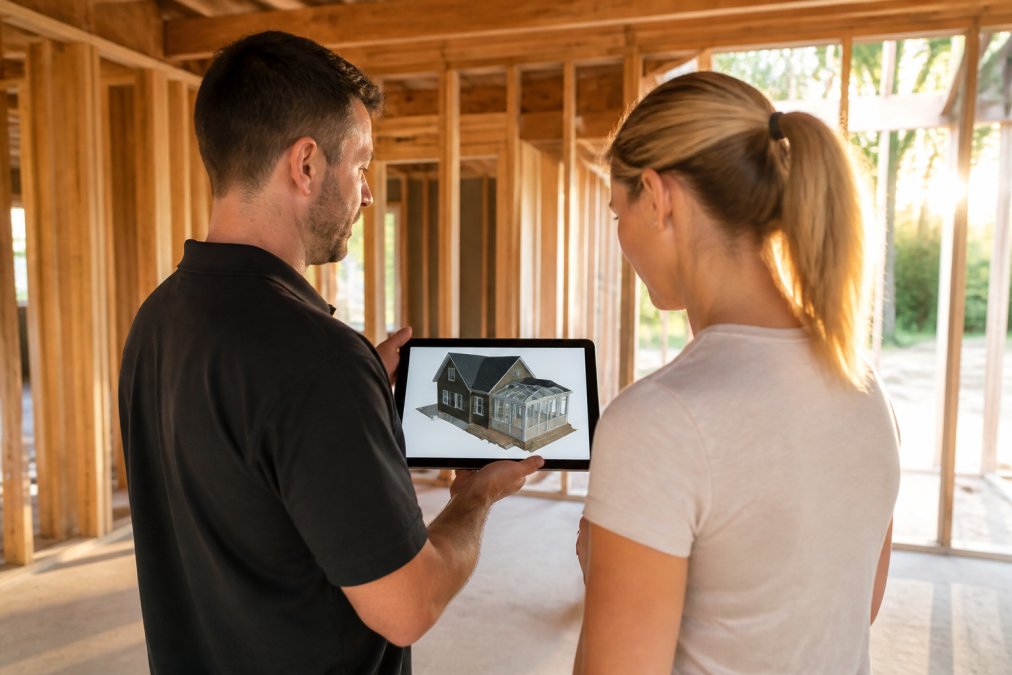
Remodeling Pros is a Jacksonville contractor specializing in residential structural remodeling and home additions, and it earns the top spot here for one practical reason: you keep using your home while the work happens. The company’s exclusive Last Day Breakthrough system keeps the original structure intact until the last moment, using surgical demolition techniques rather than tearing out a wall on day one.
How the Last Day Breakthrough system actually works
Standard additions open the house to the weather and to the jobsite on day one. The wall comes down, the family relocates, and the project runs on a hotel-and-restaurant budget until final inspection. The Last Day Breakthrough sequence inverts that order. Framing, roofing, and rough-in work happen while the existing envelope stays sealed. The connection between old structure and new, the moment the two spaces become one, is scheduled for the end, after the new space is dried in and inspected.
Matching the addition to local architecture
An addition that ignores the original house’s style can hurt resale even when the workmanship is excellent. Northeast Florida’s housing stock runs across a few recognizable patterns, and a good builder designs to the one your home already speaks:
- Florida Cracker and bungalow: low-pitched metal roofs, deep porches, horizontal siding, and simple massing. Additions here should keep roof pitch and porch depth consistent so the new wing reads as original.
- Mediterranean and Spanish revival: stucco walls, barrel-tile roofs, arched openings, and wrought-iron details. Matching tile profile and stucco finish is the difference between seamless and obvious.
- Coastal and contemporary: large glazing, clean lines, elevated or open ground floors, and durable exterior materials rated for salt air and humidity.
Which additions actually add value
Not every square foot returns the same at resale. A common pattern in this market is that additions which solve a functional gap, a primary suite, an additional bathroom, a flexible guest or in-law space, tend to hold value better than highly personalized spaces. Sunrooms and enclosed porches can be polarizing because buyers either love them or see them as a future project.
What clients say
Customers consistently point to communication: “Keith always responded quickly and thoroughly to my questions or concerns,” one reviewer noted, and another said the crew was “extremely cooperative in helping us understand the issues of exterior and interior construction.”
Indoor Home Enhancers: Versatile General Contracting
Indoor Home Enhancers is a well-reviewed local general contractor built around dependable service and a broad skill set. The firm handles kitchen and bathroom remodeling, builds and installs custom cabinets, and takes on structural changes that require general contracting oversight. That range makes it a reasonable fit if your addition touches several rooms at once and you would rather not coordinate three separate trades.
Cowford Cabinetry & Design: Custom Cabinetry and Interiors
Cowford Cabinetry & Design runs a design-build model with custom cabinetry at its center. If your addition is really a kitchen expansion or a built-in storage wall, this is the firm that treats cabinetry as the starting point rather than an afterthought. The integrated approach means design consultation, fabrication, and installation sit under one roof, which cuts down on the finger-pointing that happens when a cabinet maker and a framer disagree about dimensions.
Cutillas Custom Marble: High-End Stone Finishes
Cutillas Custom Marble is a specialist, not a general contractor, and that is the point. The company fabricates and installs custom marble and stone for kitchens and bathrooms, sourcing high-quality material and handling precision cuts that general crews typically subcontract out. For a luxury addition where the stone is a headline feature, hiring the specialist directly often produces a tighter result.
Bo & Rose Homes: Collaborative Custom Builds
Bo & Rose Homes offers custom home construction and residential renovation with an emphasis on client communication. Homeowners who want a partner rather than a vendor tend to like the model: you are in the conversation from concept through punch list, and the firm manages the project end to end.
Thumbtack, Houzz, and BuildZoom: Contractor Marketplaces
Marketplaces are useful for gathering quotes, not for replacing due diligence. Thumbtack lets you post a project and compare local contractors side by side, with verified reviews and direct messaging. Houzz leans visual, with extensive photo galleries that help you settle on a style before you talk to anyone. BuildZoom takes a different angle, recommending contractors based on historical building permit data, which is a smart way to confirm a builder has actually pulled permits for work like yours.
Frequently Asked Questions
How do I verify a contractor’s license in Florida?
Florida requires state certification or registration for most contractors. Check the Florida Department of Business and Professional Regulation (DBPR) website to confirm an active license. You can also verify insurance by requesting a Certificate of Insurance directly from the contractor’s insurer. Ask for the license number in writing and cross-reference it before signing anything. A legitimate home addition builder will provide this without hesitation.
How long does a typical home addition project take to complete?
Most home addition projects take four to eight months from design through final inspection, depending on scope and permitting. A home addition construction timeline typically includes two to six weeks for permits, one to two weeks for site prep and foundation, several weeks for framing and roofing, and additional time for HVAC integration, plumbing, electrical, and finishes. Weather and material availability can extend the schedule.
Do I need a permit for a home addition?
Yes. Every structural home addition requires a building permit in Jacksonville. You will also need to comply with local zoning regulations covering setbacks, lot coverage, and height limits. Your contractor should handle the permit application and coordinate inspections. Skipping permits can result in fines, forced demolition, and problems when you sell the home.
What should I look for when hiring a home addition contractor?
Look for a licensed and insured general contractor with experience in projects similar to yours. Ask for local references and visit completed additions. Confirm they carry general liability insurance and workers’ compensation. Get a detailed written contract with a payment schedule tied to milestones, not upfront lump sums. Also verify they pull permits in their own name and have a clear process for change orders.
How much does a home addition cost per square foot?
Costs vary widely based on scope, materials, and structural complexity. A basic room addition costs less per square foot than a master suite or kitchen expansion with plumbing and HVAC integration. Pricing depends on square footage, site conditions, finishes, and permit requirements. Request a detailed estimate from your contractor so you can compare line items, not just totals.