Table of Contents
- What Is a Mid-Range Kitchen Remodel?
- Kitchen Renovation Budget Breakdown by Component
- Factors That Influence Mid-Range Kitchen Remodel Cost
- How Long Does a Kitchen Remodel Take?
- Mid-Range Kitchen Remodel ROI and Resale Value
- Kitchen Remodeling Planning Checklist and Cost-Saving Strategies
- Frequently Asked Questions
Last Updated: August 30, 2026
What Is a Mid-Range Kitchen Remodel?
A mid-range kitchen remodel balances quality with affordability by replacing key components, cabinetry, countertops, appliances, and fixtures, while keeping the existing layout intact. This approach delivers measurable improvements in functionality and aesthetics without the expense and disruption of moving plumbing lines or electrical systems.
At Remodeling Pros, we’ve guided homeowners through this decision. The mid-range remodel transforms how your kitchen looks and performs without structural overhaul. You get new cabinetry with better storage, updated countertops in durable materials, modern appliances, and refreshed lighting and hardware, all without moving walls or reconfiguring plumbing and electrical systems.
The real value of a mid-range remodel lies in targeting the elements people see and use daily. Focusing your budget here delivers the highest return on investment and satisfaction.
Kitchen Renovation Budget Breakdown by Component
The largest expense categories in a typical mid-range project are labor, cabinetry, and countertops, which together often account for 60-70% of the total budget (nahb.org).
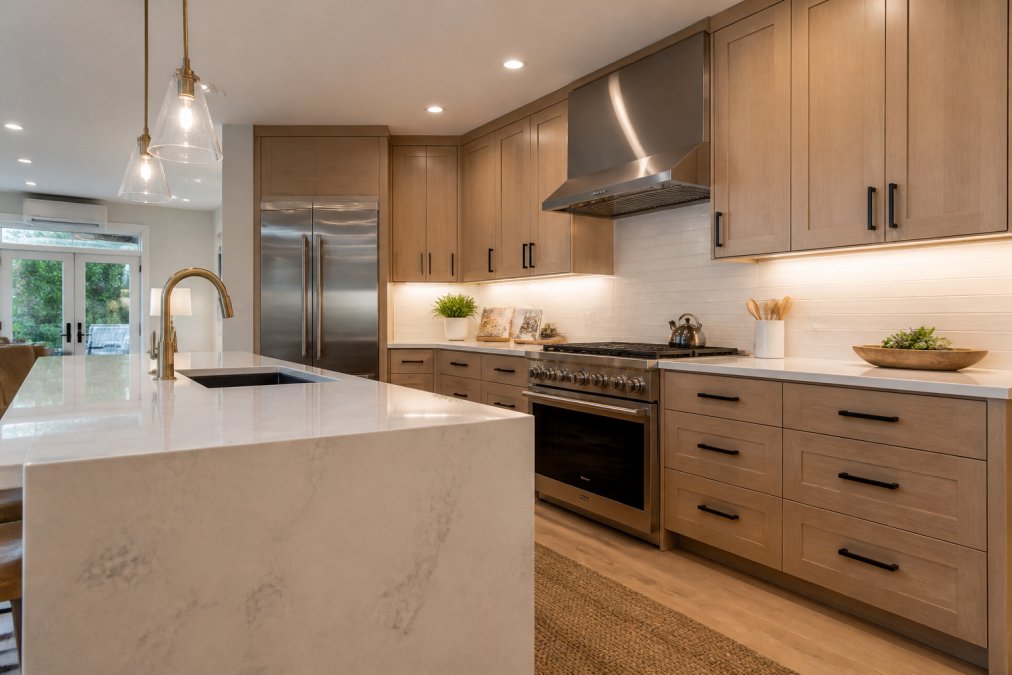
Cabinetry typically represents the single largest line item. Semi-custom or stock cabinetry with quality construction provides excellent durability and appearance without premium pricing. Cabinet refacing, refinishing existing cabinetry rather than replacing it, can reduce this cost significantly if your existing structure is sound.
Countertops form the second major expense. Materials like quartz, laminate with edge details, or solid surface options deliver premium aesthetics at mid-range prices. Engineered quartz offers similar aesthetics to granite with better durability and lower maintenance.
Appliances consume a meaningful portion of the budget. Mid-range appliance packages offer reliable performance and modern features without premium pricing. Stainless steel finishes remain standard.
Labor costs for installation, demolition, and project management typically run 35-45% of the total budget, including cabinet installation, countertop fabrication and installation, appliance hookup, flooring installation, and any necessary plumbing or electrical work.
Additional components include backsplash tile, flooring, lighting fixtures, hardware, paint, and permit fees. The breakdown shifts based on your specific choices. Prioritizing cabinetry and countertops while selecting mid-level appliances creates one budget profile; choosing premium appliances with simpler cabinet finishes creates another.
Factors That Influence Mid-Range Kitchen Remodel Cost
Several variables directly impact your final price. Recognizing these factors early allows informed decisions about where to invest and economize.
Project scope and layout changes
Keeping your existing layout, sink, range, and refrigerator in their current positions avoids the cost of moving plumbing and electrical lines, a decision that can save thousands. Structural changes like removing a wall, relocating a window, or reconfiguring the floor plan escalate costs rapidly and require structural engineering assessment and additional permits.
Cabinet configuration matters significantly. A kitchen with an island requires more cabinetry and countertop material than a galley layout. The number of linear feet of cabinetry directly correlates to material and installation expense.
Material selection and lead times
Your material choices drive both immediate and long-term costs. Stock cabinetry costs less upfront but may show wear sooner; semi-custom options offer better durability at moderate price increases. Laminate countertops cost less than quartz, which costs less than natural stone.
Supply chain considerations mean some materials require 8-12 week lead times before installation. Choosing readily available materials in standard configurations keeps your timeline predictable. Custom colors, finishes, or specialty materials may require longer waits and premium pricing.
Plumbing, electrical, and permit requirements
Existing systems may require updates within your project. Code compliance often mandates upgrading outlets to GFCI-protected circuits, installing proper ventilation, or updating water supply lines. Permit requirements vary by jurisdiction and project scope; they typically represent 2-5% of the total budget.
Set aside a contingency fund of 10-15% of your budget for unexpected issues discovered during demolition.
How Long Does a Kitchen Remodel Take?
A mid-range kitchen remodel typically spans 6-12 weeks from start to finish, though this varies based on scope, material availability, and contractor scheduling (nahb.org).
Demolition and preparation usually requires 1-2 weeks, including removal of existing cabinetry, countertops, appliances, and flooring. Careful demolition protects surrounding areas and salvages materials you want to keep.
Rough-in work for plumbing and electrical takes 1-2 weeks if modifications are needed. If you’re keeping your existing layout, this phase may be minimal.
Cabinet and countertop installation typically requires 2-3 weeks. Countertop fabrication happens in parallel; installation follows cabinet placement.
Appliance installation, flooring, backsplash, and finishing occupies the final 2-3 weeks.
Material lead times extend the overall timeline. Coordinating material orders early, sometimes before construction begins, keeps the project moving efficiently.
The actual construction time for a mid-range kitchen remodel is typically 6-8 weeks. Material lead times, not labor, usually determine your total timeline from decision to completion.
Mid-Range Kitchen Remodel ROI and Resale Value
A mid-range kitchen remodel typically returns 50-60% of the investment in resale value, meaning a $50,000 project might add $25,000-$30,000 to your home’s selling price, according to the National Association of Realtors’ Cost vs. Value Report.
This return varies by region and market conditions. In competitive markets where homes sell quickly, updated kitchens become essential. The quality of materials and workmanship matters significantly, a well-executed mid-range remodel outperforms a poorly done high-end one.
Beyond resale value, consider the intangible returns. You’ll enjoy an improved kitchen for years before selling. Better functionality, updated appliances, and refreshed aesthetics enhance daily life.
Certain upgrades deliver stronger resale returns. New cabinetry and countertops consistently add value because they’re visible and functional. Updated appliances and improved lighting appeal to buyers. Highly personalized design choices may not resonate with future buyers.
Kitchen Remodeling Planning Checklist and Cost-Saving Strategies
Successful projects require methodical planning and strategic decision-making.

Planning Checklist:
- Define your total budget and get pre-approved financing if needed
- Establish your priority list: which elements matter most to you?
- Measure your kitchen carefully and create a detailed layout
- Research and collect inspiration images of kitchens you like
- Get 3-5 contractor bids for comparison and vetting
- Review each contractor’s references and past projects
- Finalize cabinetry, countertop, and appliance selections
- Order long-lead items early
- Obtain all necessary permits before work begins
- Plan for temporary kitchen setup during construction
- Establish a communication schedule with your contractor
- Set aside a 10-15% contingency fund for unexpected issues
Cost-Saving Strategies include selecting stock or semi-custom cabinetry instead of fully custom options, choosing durable mid-range countertop materials like quartz, keeping your existing layout, selecting standard appliance sizes and finishes, and doing some finishing work yourself if you have the skills.
Cabinet refacing deserves special consideration. If your existing cabinetry is structurally sound, refinishing the exterior and replacing hardware delivers dramatic visual transformation at 40-50% of replacement cost.
Financing options for mid-range projects
Cash payment eliminates interest costs but may deplete savings. A home equity line of credit (HELOC) typically offers lower interest rates than personal loans. Home equity loans provide fixed rates and predictable monthly payments. Some contractors offer financing partnerships with third-party lenders, sometimes with promotional rates.
Always understand the full terms, interest rate, fees, and repayment period before committing. Consider your emergency fund, other debt obligations, and comfort level with monthly payments.
Contractor vetting and bid comparison
Request detailed bids from multiple contractors that break down labor, materials, and timeline separately. Compare not just price but scope, ensuring each bid covers identical work.
Check references thoroughly and verify licensing, insurance, and bonding. Licensed contractors carry general liability insurance and workers’ compensation coverage, protecting you from liability.
Red flags include contractors requesting full payment upfront, pressure to sign immediately, reluctance to provide references, or refusal to get permits. Reputable contractors establish clear payment schedules tied to project milestones and insist on proper permits.
The lowest bid doesn’t guarantee the best value. Experienced contractors provide transparent pricing reflecting quality materials and skilled labor. Remodeling Pros’ 3D design system and detailed planning prevent budget surprises and ensure your vision becomes reality.
A mid-range kitchen remodel represents one of the highest-return home improvements you can make. By understanding component costs, planning methodically, and selecting contractors who prioritize quality and communication, you’ll transform your kitchen into a space that serves your family well for years to come. Remodeling Pros specializes in exactly this type of project, using sophisticated 3D rendering to visualize your kitchen before construction begins and employing surgical demolition techniques that protect your home’s original structure. Get a Quote today to explore how a mid-range kitchen remodel can enhance both your daily life and your home’s value.
Frequently Asked Questions
What is a realistic budget for a mid-range kitchen remodel?
A mid-range kitchen remodel’s cost varies by region, project scope, and material choices. The key is allocating your budget effectively across cabinetry, labor, countertops and backsplash, appliances, flooring, lighting, and contingencies. Work with a contractor to get itemized bids that reflect your specific kitchen’s layout and your chosen finishes.
What items are included in a mid-range kitchen renovation?
A mid-range kitchen renovation typically includes new cabinetry (refaced or semi-custom), laminate or solid surface countertops, mid-grade appliance package, vinyl or ceramic tile flooring, updated lighting fixtures, basic backsplash, hardware upgrades, and fresh paint. It may also involve minor plumbing and electrical work, but usually avoids structural changes, full custom cabinetry, or high-end stone countertops. Your contractor can clarify what’s included in your specific project scope.
How long does a typical mid-range kitchen remodel take?
Most mid-range kitchen remodels take 6 to 12 weeks from start to finish, depending on project scope and material lead times. Cosmetic refreshes may finish in 4 to 6 weeks, while projects involving structural changes, plumbing relocation, or electrical upgrades can stretch to 12 to 16 weeks. Supply chain delays can add 2 to 4 weeks, especially for custom cabinetry or specialty appliances. Your contractor should provide a detailed renovation timeline during the planning phase.
Will a mid-range kitchen remodel add value when I sell?
Mid-range kitchen remodels typically return 50% to 60% of their cost at resale, according to industry cost-versus-value reports. The return depends on your home’s current condition, local market demand, and the quality of materials and workmanship. Avoid over-upgrading with luxury finishes in a mid-range neighborhood, as the return diminishes. Consult your realtor and contractor on which upgrades best suit your market.
What’s the difference between mid-range and upscale kitchen remodels?
Mid-range remodels use semi-custom or stock cabinetry, laminate or solid surface countertops, and mid-grade appliances. Upscale remodels feature custom cabinetry, high-end stone countertops, premium appliances, and often include structural changes or high-end finishes. Mid-range projects focus on functionality and value, while upscale projects prioritize luxury materials and custom design. Your budget and long-term plans should guide which tier suits your home.
How can I avoid cost overruns on a kitchen remodel?
Set a realistic budget with a 10% to 15% contingency fund for unexpected issues. Get detailed, itemized bids from multiple contractors, and ensure your contract includes a change-order process that requires written approval before additional work begins. Choose materials early to avoid lead-time delays, and communicate regularly with your contractor throughout the project. Avoid making design decisions mid-project, as changes are expensive. A clear scope of work and written timeline help prevent surprises.
Can I do a kitchen remodel for $30,000 or less?
Yes, but you’ll be doing a cosmetic refresh rather than a full remodel. A budget around this amount works for cabinet refacing, new countertops, updated lighting, and fresh appliances, but typically excludes major plumbing or electrical work, new flooring, or structural changes. This approach can improve functionality and appearance without a full gut renovation. A contractor can help you prioritize which upgrades deliver the most impact within your budget constraints.