Table of Contents
- Structural Renovation vs Cosmetic Remodel: Key Differences
- Side-by-Side Comparison: Scope, Cost, and Timeline
- Remodeling Old Houses With Structural Issues
- Permits for Home Renovation Projects
- Cost of Structural Home Repairs and ROI
- Insurance, Disclosure, and Financing Considerations
- How to Decide: A Decision Framework
- Conclusion
- Frequently Asked Questions
Last Updated: September 10, 2026
Structural Renovation vs Cosmetic Remodel: Key Differences
The difference between a structural renovation and a cosmetic remodel comes down to one question: are you changing how the house is built, or only how it looks? A structural renovation alters the load-bearing framework, foundation, or building envelope (hud.gov). A cosmetic remodel replaces finishes and fixtures without touching the core framework. At Remodeling Pros, we have walked Northeast Florida homeowners through both since 1998, and the distinction shapes budget, permits, timeline, and resale value.
What Counts as a Cosmetic Remodel
A cosmetic remodel updates surfaces, finishes, and fixtures while leaving the structure, floor plan, and mechanical systems in place: new cabinets, countertops, flooring, paint, light fixtures, and appliance swaps. No walls come down and no load distribution changes.
Common cosmetic upgrades include:
- Refacing or replacing kitchen cabinets and countertops
- New flooring over sound subfloor
- Interior paint, trim, and wall coverings
- Updated fixtures and fittings in bathrooms
- Replacing a vanity, toilet, or shower surround without moving plumbing
Cosmetic work rarely requires a permit, moves fast, and carries the lowest risk of surprise, but does the least to change what the house fundamentally is (hud.gov).
What Counts as a Structural Renovation
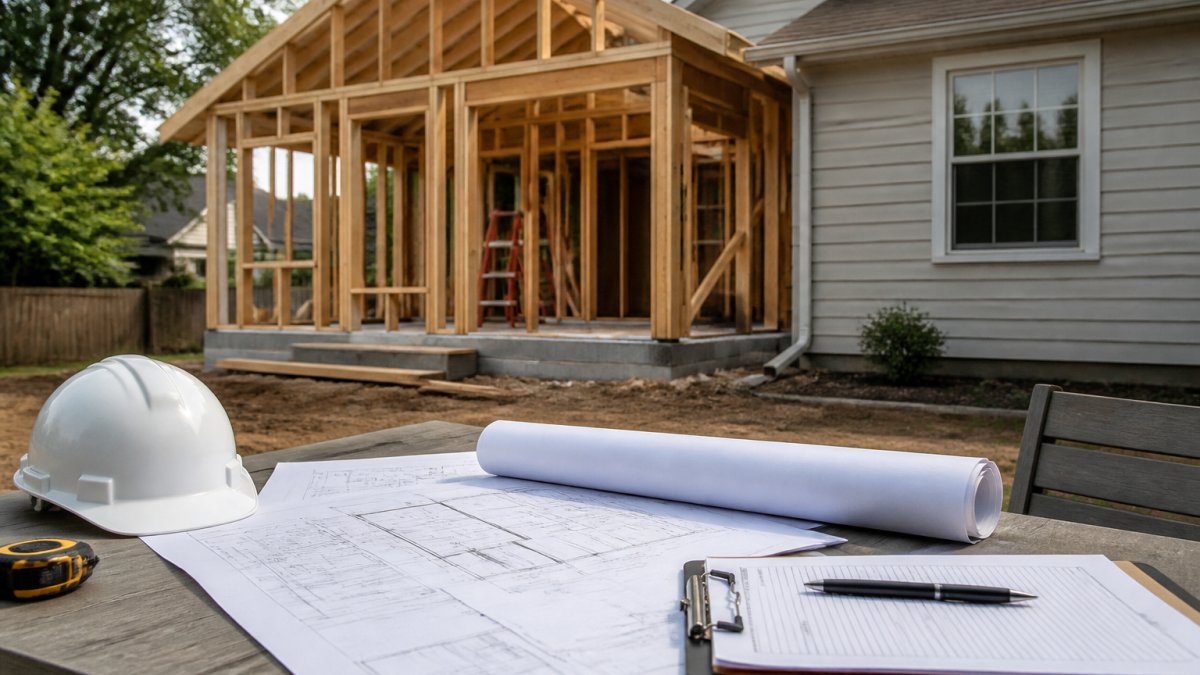
A structural renovation modifies the load-bearing elements of a home: walls, beams, columns, foundation, roof framing, or the building envelope. Removing a load-bearing wall, adding a second story, digging a new foundation, or reconfiguring a floor plan all qualify.
Structural work typically involves:
- Removing or relocating load-bearing walls
- Adding square footage, including room additions
- Foundation repair or underpinning
- Floor plan reconfiguration that changes load paths
- Roof line changes and dormers
- Major HVAC and electrical system relocation
Any project that alters structural stability or load distribution needs a structural engineer, architectural drawings, and permits before demolition starts.
Side-by-Side Comparison: Scope, Cost, and Timeline
Structural work costs more, takes longer, and requires permits; cosmetic work is faster and cheaper but limited in what it can achieve.
| Factor | Cosmetic Remodel | Structural Renovation |
|---|---|---|
| Scope | Interior finishes, fixtures and fittings | Core framework, foundation, load distribution |
| Permits | Rarely required | Almost always required |
| Professionals | General contractor, trades | Structural engineering, architect, licensed contractor |
| Timeline | Weeks | Months |
| Disruption | Minimal | Significant, unless staged carefully |
| ROI driver | Aesthetic appeal | Home equity and usable space |
| Reversibility | Easy | Effectively permanent |
The cost gap is real but not the whole story. A structural renovation budget must absorb engineering fees, permit costs, and contingency for what demolition uncovers. Cosmetic work is far more predictable because the surprises are smaller.
The most expensive mistake homeowners make is treating a structural problem as cosmetic. Painting over a cracked foundation wall or covering sagging floors with new flooring hides the symptom while the underlying damage keeps growing. The repair bill grows with it.
Remodeling Old Houses With Structural Issues
Older homes hide structural problems behind finished walls, and age is the best predictor of what you will find. Remodeling old houses with structural issues starts with a site inspection, not a design meeting, before anyone draws a kitchen, someone needs to look at the bones.
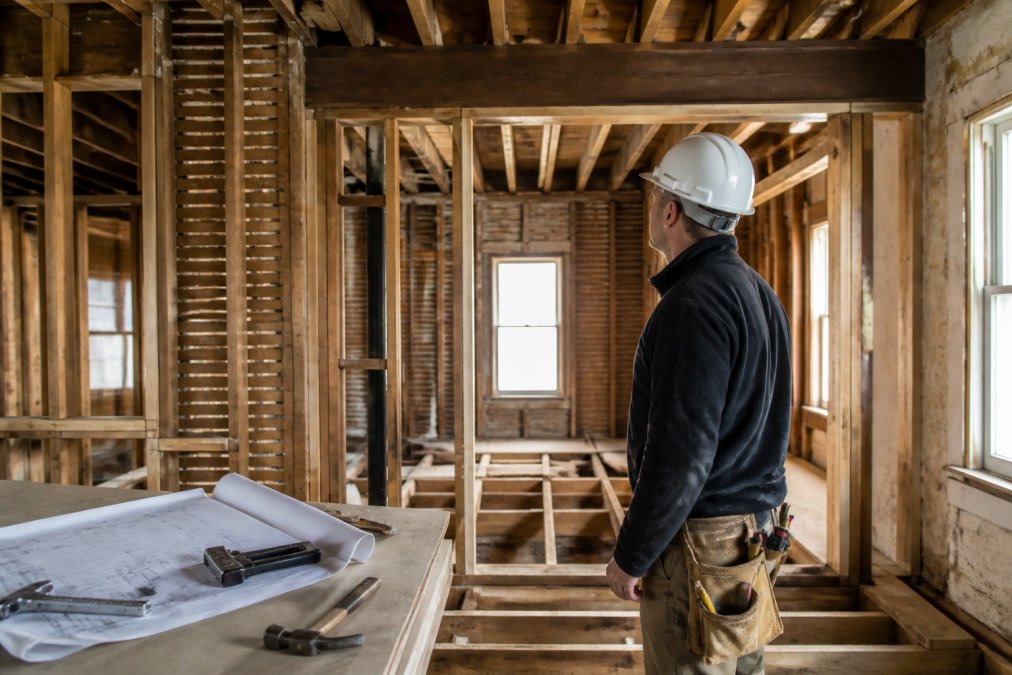
What we typically find in older housing stock:
- Settled or cracked foundations that have shifted over decades
- Undersized or sistered joists carrying more load than intended
- Outdated wiring and galvanized plumbing that fails code
- Previous DIY modifications that cut through load-bearing members
A common mistake is budgeting for finishes before the structure is assessed. Reverse the sequence: inspect, engineer, then design. If the structure is sound, the project stays cosmetic and the budget holds. If not, you need to know before you sign a contract, not after demolition.
Permits for Home Renovation Projects
Permits for home renovation projects are required whenever work affects structure, safety, or major systems, and skipping them creates problems at resale. Cosmetic swaps usually do not need one; structural changes, additions, electrical, plumbing, and HVAC work almost always do.
Your local building department reviews architectural drawings and inspects the work at defined stages. The U.S. Department of Housing and Urban Development publishes guidance on home improvement and renovation that reinforces why documented, inspected work protects both safety and resale value.
What triggers a permit:
- Removing or altering a load-bearing wall
- Any addition or change to the building envelope
- Foundation work or structural repair
- New or relocated electrical, plumbing, or HVAC circuits
- Converting a garage, attic, or basement into living space
Unpermitted structural work can stall a sale, force retroactive permitting, or require demolition of finished work. Verify your contractor holds a current state license before work begins.
Cost of Structural Home Repairs and ROI
The cost of structural home repairs is driven by what the work touches, not square footage alone. Foundation repair, load-bearing changes, and additions carry engineering and permitting costs cosmetic projects never see, but the categories separate cleanly enough to build a realistic budget before you call anyone.
How the two categories price out
Cosmetic remodels are priced by surface area and finish grade. A mid-range kitchen refresh, refaced cabinets, new countertops, new flooring, paint, is quoted per square foot of finished surface, and the labor is largely interchangeable across contractors. That is why cosmetic bids cluster tightly.
Structural renovations are priced by the load path and the unknowns. Engineering fees are billed as a percentage of construction cost or a flat fee per drawing set, and permit fees scale with project valuation. Construction is priced by the linear foot of beam, cubic yard of concrete, and tonnage of steel, not by finished square foot. That is why two additions of identical square footage can differ in price by a factor of two or more.
What actually drives the number
- Foundation work is priced by depth, soil condition, and access. A slab-on-grade repair and a full perimeter underpinning are not the same project.
- Load-bearing wall removal is priced by the span. A short opening with a header is a fraction of the cost of a long span requiring a steel beam and new footings at each end.
- Additions are priced by foundation type, roof tie-in complexity, and whether mechanical systems must be extended.
- Second-story additions carry the highest per-square-foot cost of any common residential structural project because the existing foundation and framing must be verified to carry the added load.
Where the money comes back
The honest answer to “will this add value” is that structural work usually does and cosmetic work usually does not, but the mechanism matters more than the headline.
- Additions and reconfigurations add usable square footage, which appraisers value against comparable sales, so an addition typically returns a meaningful share of its cost at resale while a finish upgrade returns far less.
- Foundation and structural repairs protect existing equity rather than adding to it. A buyer’s inspector will find the problem, and the negotiation will reflect it, usually at a discount larger than the cost of fixing it correctly.
- Cosmetic upgrades improve aesthetic appeal and speed up a sale, but rarely change what the home is worth. They change how fast it sells, not what it appraises for.
The contingency rule
A structural renovation budget must absorb engineering fees, permit costs, and contingency for what demolition uncovers. The contingency line is often the difference between a project that finishes on budget and one that stalls halfway. Cosmetic work is far more predictable because the surprises are smaller and reversible.
The most expensive mistake homeowners make is treating a structural problem as cosmetic. Painting over a cracked foundation wall or covering sagging floors with new flooring hides the symptom while the underlying damage keeps growing. The repair bill grows with it.
For current project pricing in your market, request a quote rather than relying on national averages, but go into that conversation knowing which cost drivers apply to your scope.
Insurance, Disclosure, and Financing Considerations
Insurance, disclosure, and financing rules treat structural and cosmetic work very differently, the angle most renovation guides ignore. Getting these three right separates a project that closes cleanly from one that stalls at resale.
Insurance: coverage follows the permit trail
Your homeowners policy is written against the home as documented when issued. Permitted, inspected, and closed-out structural changes are typically reflected at renewal or on request; unpermitted structural changes sit outside that paper trail, and that is where claims get denied.
A water or fire claim can reveal unpermitted structural work during the adjuster’s inspection, and the insurer can treat the loss as arising from a condition the policy never agreed to cover. Cosmetic work rarely triggers this because it does not alter the structure’s risk profile.
Two practical steps:
- Notify your insurer when structural work is complete and provide the permit close-out documentation. Many carriers will update the replacement cost estimate at the same time.
- Ask whether the scope changes your coverage needs. An addition that adds square footage, a new roof line, or a finished basement changes what the policy should be written to cover.
Disclosure: what follows the house when you sell
In most states, sellers must disclose known structural defects and material facts on a standard disclosure form. The form and triggers vary by state, but the pattern is consistent: unpermitted structural work you knew about and did not disclose can expose you to legal claims after the sale.
Cosmetic work generally does not require disclosure because it does not affect structural condition. Structural work does, and the cleanest defense is documentation: keep the permit, inspection sign-offs, engineering drawings, and the contractor’s final invoice. When a buyer’s agent asks, you hand over a file instead of a story.
A related point: some states require disclosure of permitted work even when it was done correctly, because the buyer has a right to know the home’s history. Check your state’s disclosure form before listing.
Financing: the products are not interchangeable
The financing gap between the two categories is larger than most homeowners expect, and the most useful thing to understand before you start shopping.
- Cosmetic remodels are often funded from savings, a credit card with a promotional rate, or a small personal loan. The amounts are modest and the timelines are short, so unsecured credit is workable.
- Structural renovations more often use secured financing because the amounts are larger and the timelines longer. The common products are:
- Home equity loan, a fixed-rate second mortgage against your equity, with a fixed repayment schedule.
- HELOC, a variable-rate line of credit you draw against as work progresses, which pairs well with a phased structural project.
- Cash-out refinance, replaces your first mortgage with a larger one and hands you the difference in cash. Best when rates are favorable relative to your existing loan.
- FHA 203(k), a government-insured mortgage that folds the renovation cost into the home loan. It is built for projects that include structural work and requires a HUD-approved consultant to inspect and sign off on the scope. It is not available for cosmetic-only projects.
Lenders frequently require permits and inspections before releasing funds on structural work, another reason to pull permits even when a contractor offers to skip them. The lender’s draw schedule and the building department’s inspection schedule must line up, and that is the borrower’s problem to manage.
Sustainability: the waste gap
Structural renovations generate far more material waste than cosmetic ones, demolition of framing, concrete, and roofing produces debris cosmetic work never touches. Reusing existing framing, salvaging fixtures, and choosing longer-lived materials reduces landfill volume and long-term replacement cost. Some jurisdictions require a demolition waste diversion plan as part of the permit, so ask your building department before assuming debris can go in a single dumpster.
Permits are not just a code requirement. They are the paper trail that keeps your insurance claim payable, your disclosure clean, and your lender willing to release funds.
How to Decide: A Decision Framework
Use this framework to decide between a structural renovation and a cosmetic remodel before you commit a dollar. Work through it in order.
- Is anything actually broken or unsafe? Sagging floors, foundation cracks, or bowing walls mean structural. Stop here and get an inspection.
- Do you need more space or a different layout? If yes, that is structural. If the layout works and you just want it to look better, it is cosmetic.
- Does the work touch a load-bearing wall, foundation, or the building envelope? If yes, it is structural, full stop.
- What is your realistic budget? Cosmetic projects are more predictable. Structural projects need contingency for what demolition reveals.
- What is your timeline? Weeks points to cosmetic. Months points to structural.
- What is the goal: enjoyment, resale value, or both? Enjoyment favors cosmetic. Value favors structural.
The cheapest structural renovation is the one you plan properly the first time. Redoing work because the scope was underestimated costs far more than the engineering fee you skipped.
Conclusion
The hardest part of any renovation is not choosing finishes. It is knowing which category you are actually in before you sign a contract. Get that wrong and the budget, timeline, and resale outcome all suffer. Remodeling Pros handles structural renovation and home additions with sophisticated 3D design so you can see the project before it is built, and our exclusive Last Day Breakthrough system keeps your original structure intact until the last moment, so your family can keep living in the house during construction. If you are weighing a structural renovation against a cosmetic remodel, get a quote from Remodeling Pros and start with a clear read on what your home actually needs.
Frequently Asked Questions
What is the difference between a structural renovation and a cosmetic remodel?
A structural renovation changes the core framework of a home: load-bearing walls, foundation, roof framing, or floor plan reconfiguration. A cosmetic remodel updates surfaces and finishes like paint, flooring, cabinets, and fixtures without touching the structure. The dividing line matters because structural work usually requires building permits, architectural drawings, and a licensed contractor, while cosmetic updates often do not.
Do I need a permit for structural changes versus cosmetic updates?
Permits for home renovation projects are typically required whenever you alter structural elements, electrical systems, plumbing, or HVAC. Cosmetic work like painting, replacing cabinets, or installing new flooring usually does not need a permit. Because local building codes vary, confirm requirements with your municipal building department before starting. Skipping a required permit can stall resale and trigger fines or forced removal.
How does the cost of structural home repairs compare to a cosmetic remodel?
The cost of structural home repairs runs higher because it involves engineering, demolition, foundation work, and inspections. Cosmetic remodels cost less per square foot since they focus on finishes. Exact pricing depends on project scope, home age, and material choices. Remodeling Pros provides project-based estimates after a site inspection, so request a quote for numbers specific to your home.
Can a cosmetic remodel hide underlying structural issues?
Yes, and that is a common risk. Fresh drywall, new flooring, or a coat of paint can mask cracks, water damage, or a sagging beam. If your home shows symptoms like sticking doors, sloping floors, or recurring ceiling cracks, get a structural inspection before cosmetic work. Fixing the core framework first prevents you from paying twice.
Which adds more resale value: structural renovation or cosmetic remodel?
It depends on what buyers in your market value. Cosmetic upgrades improve aesthetic appeal and photograph well in listings, which can speed a sale. Structural renovations that add square footage, fix foundation problems, or reconfigure a cramped floor plan often raise property valuation more because they change what the home can do. A contractor can help you weigh return on investment for each option.