Table of Contents
- Kitchen Remodel ROI by Project: What the Numbers Say
- The Top Kitchen Remodel Upgrades for Resale, Ranked
- 1. Cabinet Refacing and Painting
- 2. Countertop Material Upgrades: Quartz vs. Granite
- 3. Backsplash Installation
- 4. Modern Lighting Upgrades and Under-Cabinet Lighting
- 5. Energy-Efficient Appliance Upgrades
- 6. Flooring Updates: LVP and Porcelain Tile
- 7. Hardware, Faucet, and Fixture Replacement
- 8. Kitchen Island Additions and Smart Storage
- Cost-Effective Kitchen Updates for Resale: High Impact, Lower Spend
- Regional Market Variations and Eco-Friendly Upgrades That Boost Value
- The ‘Don’t Do’ List: Kitchen Remodel Upgrades That Hurt Resale
- Kitchen Renovation Timeline: How Long Each Upgrade Takes
- Frequently Asked Questions
Last Updated: August 20, 2026
Homeowners planning to sell often ask: which kitchen upgrades actually pay off? At Remodeling Pros, we’ve guided homeowners through this decision, and the gap between upgrades that recoup their cost and ones that simply cost money is wider than you’d expect.
The kitchen remains the single room buyers scrutinize most during a walkthrough. A dated kitchen can kill a sale; a thoughtfully updated one can justify a significantly higher asking price. Below, we’ll cover the best kitchen remodel upgrades for resale ranked by impact, what to avoid, and how to think about regional and sustainability factors that most guides ignore entirely.
Quick Picks:
- Highest ROI: Cabinet refacing and painting, maximum visual impact, minimum spend
- Best Material Upgrade: Quartz countertops, low maintenance, broad buyer appeal
- Biggest Mistake: Over-customizing with personal taste rather than neutral, market-ready choices
Kitchen Remodel ROI by Project: What the Numbers Say
Kitchen remodel ROI varies considerably depending on scope, materials, and local market conditions. Minor kitchen remodels return more of their cost than major gut renovations, because buyers discount heavily for the disruption and uncertainty of a full overhaul.
According to Remodeling Magazine’s Cost vs. Value Report, minor kitchen remodels consistently outperform major renovations on resale return. Neutral, well-executed updates appeal to the widest buyer pool.
Three principles govern kitchen renovation ROI:
- Depersonalization beats personalization. Neutral color palettes, classic materials, and clean lines appeal across demographics.
- Functional upgrades outperform decorative ones. Storage, lighting, and countertop durability matter more than a statement backsplash.
- Condition matters as much as upgrades. A spotless original kitchen often outperforms a renovated one that shows poor workmanship.
The Top Kitchen Remodel Upgrades for Resale, Ranked
The eight upgrades below are ordered by their combination of resale impact, cost-effectiveness, and broad buyer appeal.
1. Cabinet Refacing and Painting
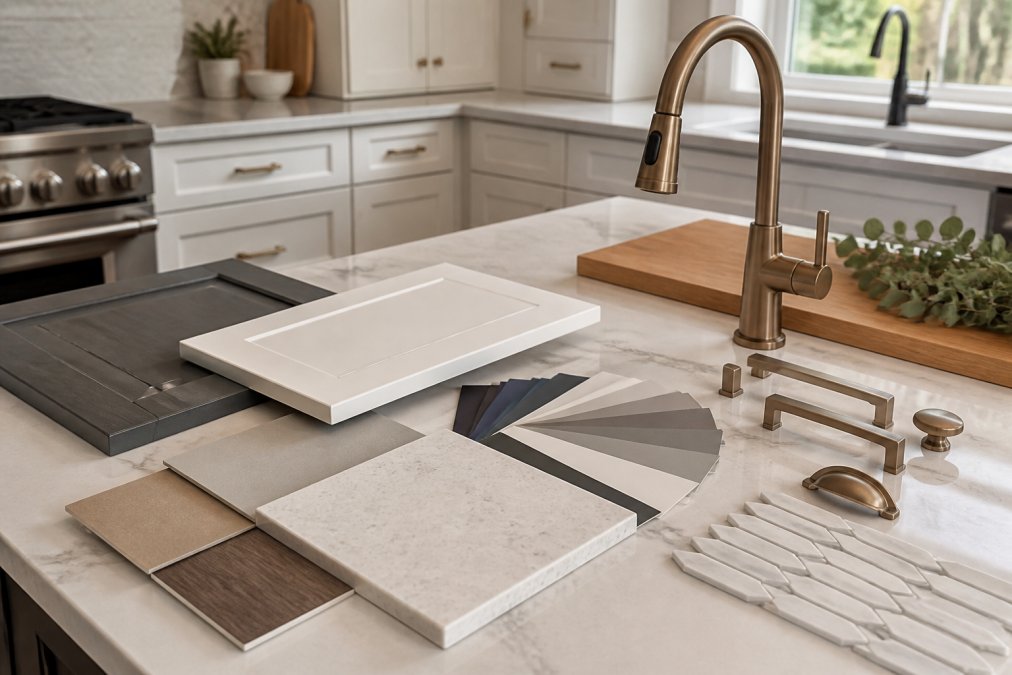
Cabinet refacing and painting is the highest-ROI kitchen upgrade because cabinets dominate the visual field. Refacing involves applying new door fronts and veneer overlay to existing cabinet boxes, or painting solid-wood cabinets in a neutral tone. Both achieve dramatic transformation at far lower cost than full replacement, yet buyers rarely distinguish between them.
Finish quality matters enormously, a DIY paint job signals “homeowner special” and hurts perceived value. Professional cabinet painting with a sprayed finish is a different product entirely.
Shaker-style door fronts are the current neutral choice for cabinet refacing. They read as modern without being trendy, which means they’ll still appeal to buyers in five years.
How to approach it:
- Assess cabinet box condition; refacing only works if existing boxes are structurally sound
- Choose shaker-style doors for maximum resale appeal
- Select a neutral paint color matched to your countertop direction
- Add soft-close hinges and drawer slides; buyers notice them immediately
2. Countertop Material Upgrades: Quartz vs. Granite
Quartz countertops are the stronger resale choice for most markets because they require no annual sealing, resist stains on their non-porous surface, and complement any cabinet palette. Quartz typically runs $75-$125 per square foot installed, compared to granite at $40-$100 per square foot.
Quartz is the safer resale bet because it eliminates the “does it need sealing?” question buyers ask about granite. For the broadest possible buyer pool, quartz in white or light grey is the standard recommendation.
3. Backsplash Installation
A missing or dated backsplash is one of the most noticeable deficiencies in a kitchen. Installing a clean, neutral backsplash is one of the most cost-effective updates because material cost is modest and visual impact is disproportionately large.
Subway tile in white or off-white remains the benchmark neutral choice. Large-format porcelain tile in a stone-look pattern is the current premium alternative. Avoid glass tile in bold colors, heavily patterned encaustic tile, and any backsplash that requires a buyer to share your specific aesthetic.
4. Modern Lighting Upgrades and Under-Cabinet Lighting
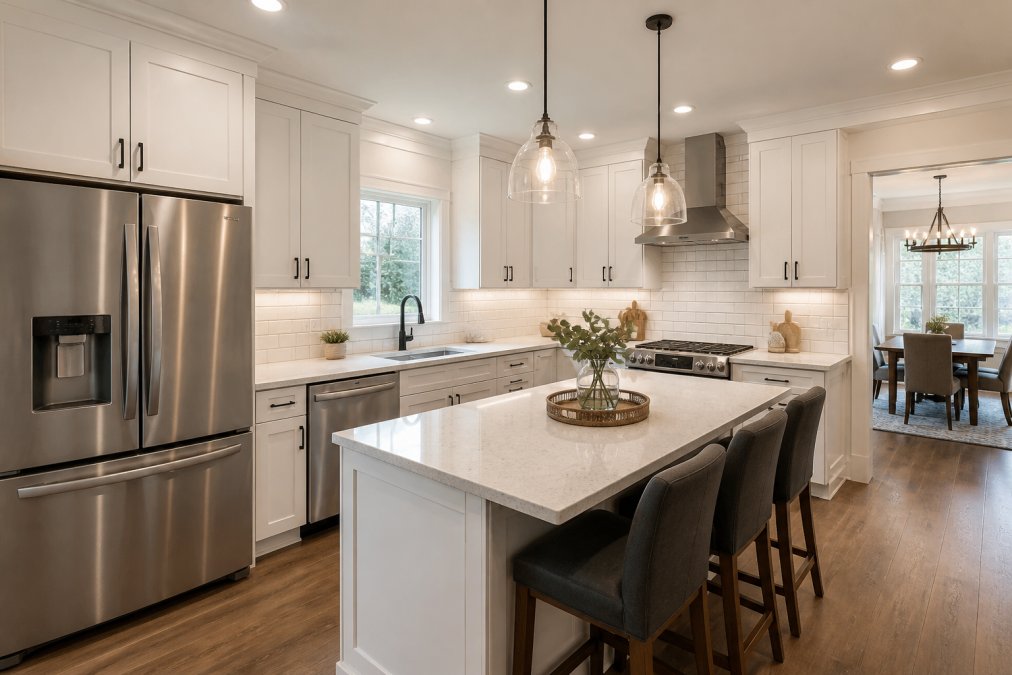
Lighting is the most underestimated kitchen upgrade for resale. Buyers respond emotionally to well-lit spaces, and most older kitchens are chronically underlit. Replacing a single builder-grade ceiling fixture with recessed lighting, pendant lights over an island, and under-cabinet lighting transforms how a kitchen feels and photographs.
Under-cabinet LED strip lighting installed beneath upper cabinets solves the countertop shadow problem and highlights the backsplash during showings.
Lighting upgrade checklist:
- Replace builder-grade ceiling fixtures with recessed LED lighting
- Add pendant lights over any island or peninsula
- Install under-cabinet LED strips or puck lights
- Replace fluorescent tube fixtures with LED alternatives
- Ensure all switches are on dimmers
5. Energy-Efficient Appliance Upgrades
An energy-efficient appliance suite signals to buyers that a kitchen has been thoughtfully updated. Mismatched appliances read as neglect. A coordinated suite in stainless steel or consistent panel-ready finish reads as intentional and well-maintained.
For resale purposes, a matching stainless steel suite from a recognized brand is the minimum bar. Upgrading to ENERGY STAR-certified models adds a practical talking point for cost-conscious buyers.
Avoid installing smart home appliance features that require proprietary apps or subscriptions. Buyers are increasingly skeptical of technology lock-in, and a refrigerator that needs a specific app can become a negotiating point against you.
6. Flooring Updates: LVP and Porcelain Tile
Flooring durability is a primary concern for buyers evaluating a kitchen. Luxury vinyl plank mimics hardwood convincingly, handles spills and heavy foot traffic without damage, and costs significantly less than solid hardwood. Porcelain tile is more durable and nearly impervious to water, though it’s harder and colder underfoot.
For most resale-focused homeowners: LVP for its combination of cost, durability, and visual warmth. Porcelain tile for kitchens where water exposure is extreme.
7. Hardware, Faucet, and Fixture Replacement
Drawer pulls, knobs, and faucet replacement are the fastest, cheapest kitchen upgrades that produce a visible result. Builder-grade hardware is almost universally cheap-looking. Pick one finish and apply it consistently. Brushed nickel remains the safe neutral. Matte black and brushed brass are currently strong choices in design-forward markets.
A pull-down faucet with matching finish signals attention to detail and costs $200-$500.
8. Kitchen Island Additions and Smart Storage
A kitchen island addition improves layout functionality, adds prep space, and creates the open-concept feel buyers consistently request. Smart storage solutions from companies like Rev-A-Shelf address common buyer objections about inadequate storage. Pull-out pantry shelves, corner cabinet organizers, and integrated trash and recycling pull-outs transform how a kitchen functions at far less cost than a full remodel.
Cost-Effective Kitchen Updates for Resale: High Impact, Lower Spend
Not every homeowner has the budget or timeline for a full kitchen renovation. Cost-effective updates can be grouped by spend and impact:
| Upgrade | Estimated Cost Range | Resale Impact | Best For |
|---|---|---|---|
| Cabinet painting (professional) | Lower investment | High | Dated but structurally sound cabinets |
| Hardware replacement | Very low | Medium-high | Any kitchen with builder-grade pulls |
| Under-cabinet lighting | Low | Medium-high | Dark or underlit kitchens |
| Backsplash installation | Low-medium | High | Kitchens missing a backsplash entirely |
| Faucet replacement | Very low | Medium | Any kitchen with original builder faucet |
| LVP flooring | Medium | High | Kitchens with damaged or dated flooring |
| Appliance suite update | Medium-high | High | Mismatched or aging appliances |
| Quartz countertop replacement | Medium-high | Very high | Kitchens with laminate countertops |
The most cost-effective updates address what buyers see first and remember longest: cabinets, countertops, and lighting.
If budget forces a choice between countertop replacement and cabinet replacement, prioritize countertops. Buyers can mentally overlook painted cabinets more easily than laminate countertops, especially where quartz has become the expected standard.
Regional Market Variations and Eco-Friendly Upgrades That Boost Value
Regional market conditions materially affect which kitchen upgrades deliver the strongest resale return. In warmer climates and coastal markets, buyers prioritize durability and low maintenance. In colder northern markets, warmth and material richness tend to score higher.
Sustainability is an increasingly material factor in home valuation. According to the National Association of Realtors’ research on green home features, a growing share of buyers report that energy efficiency and sustainable materials influence their purchase decision. Specific upgrades that carry eco-friendly resale value include:
- ENERGY STAR-certified appliances: Buyers in energy-cost-conscious markets respond to documented efficiency ratings
- LED lighting throughout: Reduces operating costs and is now expected in any updated kitchen
- Maintenance-free materials: Quartz over granite, LVP over hardwood, porcelain tile over natural stone, materials requiring less chemical treatment and less frequent replacement appeal to buyers factoring lifetime environmental footprint
- Low-VOC cabinet paints and finishes: Increasingly relevant in markets where air quality and off-gassing are buyer concerns
The ‘Don’t Do’ List: Kitchen Remodel Upgrades That Hurt Resale

1. Over-customizing for personal taste. A kitchen designed around your specific aesthetic, bold color choices, or unusual materials narrows your buyer pool. Every buyer who doesn’t share your taste mentally adds a renovation cost to their offer.
2. Installing high-end appliances in a mid-range home. A commercial-grade range in a home priced at the neighborhood median doesn’t recoup its cost. Match appliance quality to market tier.
3. Removing upper cabinets for open shelving. Open shelving is a design trend, not a buyer preference. Many buyers object because it requires constant organization. Removing functional storage for a trend is a poor resale decision.
4. Choosing trendy over timeless. Chevron tile, jewel-toned cabinets, and ultra-industrial pipe shelving have their moment. A kitchen should look designed to last a decade, not to photograph well this year.
5. Skipping professional installation. Visible grout lines, uneven cabinet doors, misaligned backsplash tile, and visible seams signal poor workmanship. A professionally installed mid-range material outperforms a DIY-installed premium one every time.
6. Upgrading the kitchen while ignoring the rest. A stunning kitchen renovation in a home with dated bathrooms and worn flooring creates a mismatch that buyers find unsettling.
Skipping permits for structural changes, including island additions requiring electrical or plumbing work, creates a disclosure liability at sale. Always pull permits for work that requires them.
Kitchen Renovation Timeline: How Long Each Upgrade Takes
Understanding the kitchen renovation timeline helps homeowners sequence projects correctly and avoid starting major renovations too close to a planned listing date.
| Upgrade | Typical Duration | Disruption Level | Lead Time Required |
|---|---|---|---|
| Hardware replacement | 1-2 hours | None | None |
| Faucet replacement | 2-4 hours | Minimal | None |
| Under-cabinet lighting | 1-2 days | Low | 1-2 weeks (materials) |
| Backsplash installation | 2-4 days | Medium | 1-2 weeks |
| Cabinet painting (professional) | 3-5 days | Medium | 2-4 weeks |
| LVP flooring | 2-4 days | Medium | 2-3 weeks |
| Countertop replacement | 1-2 weeks | High | 4-8 weeks (fabrication) |
| Appliance suite replacement | 1-3 days | Low-medium | 2-6 weeks (delivery) |
| Cabinet refacing | 3-7 days | Medium | 3-4 weeks |
| Kitchen island addition | 2-6 weeks | High | 4-8 weeks |
The most common timeline mistake: homeowners schedule countertop replacement without accounting for fabrication lead time. Quartz and granite slabs are templated after cabinet installation and fabricated off-site, a process typically taking four to eight weeks. Starting this process late pushes the entire renovation timeline past the listing date.
The best kitchen remodel upgrades for resale share a common characteristic: they’re decisions that look obvious in hindsight. Neutral materials, quality installation, functional improvements, and a clear understanding of what your specific market values deliver results.
Deciding which kitchen remodel upgrades to prioritize depends on your home’s price tier, your local market, your timeline, and the condition of what’s already there. Remodeling Pros has guided homeowners through this decision since 1998, using 3D design visualization to show clients exactly what their upgraded kitchen will look like before any work begins. Get a quote from Remodeling Pros and find out which upgrades will move the needle in your specific market.
Frequently Asked Questions
What kitchen upgrades add the most value for resale?
Cabinet refacing or painting, countertop replacements with quartz or granite, and updated lighting fixtures consistently deliver the strongest return on investment. These upgrades directly affect buyer perception during staging and property appraisal. Backsplash installation and energy-efficient appliance suites also rank highly because they signal a move-in-ready kitchen. Focusing on a neutral color palette and depersonalization ensures the space appeals to the broadest range of buyers rather than a narrow taste profile.
Are minor kitchen updates better than a full renovation for resale?
For most homeowners, targeted minor updates outperform a full gut renovation in terms of kitchen remodel ROI by project. Replacing hardware, painting cabinets, installing a new backsplash, and swapping builder-grade lighting fixtures can dramatically improve marketability at a fraction of the cost of a complete overhaul. A full renovation makes sense when the layout is functionally broken or the kitchen is severely dated. Otherwise, cost-effective kitchen updates for resale almost always recover a higher percentage of the spend.
How much should I spend on a kitchen remodel for resale?
A commonly cited guideline is to keep total kitchen renovation costs between 5% and 15% of your home’s current market value. Spending beyond that ceiling rarely recovers dollar-for-dollar at sale. The exact budget depends on your local market, the home’s price tier, and which specific upgrades you prioritize. Because costs vary significantly by scope, materials, and labor, requesting a detailed quote from a licensed contractor before committing to a budget is the most reliable way to avoid overruns.
What is the 30% rule for renovations?
The 30% rule suggests that no single renovation project should exceed 30% of your home’s current market value, and total renovation spending across all projects should stay below that threshold. For kitchen remodel upgrades specifically, this rule helps prevent over-improving a property beyond what the neighborhood’s comparable sales can support. Buyers in a given price range have a ceiling for what they’ll pay, so spending above that ceiling on kitchen renovation rarely returns full value at closing.
What are the most popular kitchen design trends for 2026?
For 2026, buyers respond strongly to open-concept layouts, integrated smart home features, and maintenance-free materials like quartz countertops and luxury vinyl plank flooring. Under-cabinet lighting, two-tone cabinet finishes, and statement backsplashes in large-format tile are all gaining traction. Sustainability also matters more than in prior years: energy-efficient appliance suites from brands like Bosch and Whirlpool and eco-friendly material choices are increasingly factored into buyer decisions and, in some markets, property appraisal discussions.