Table of Contents
- Why Remodeling Projects Exceed Budget
- Step 1: Create a Detailed Pre-Construction Plan and Cost Breakdown
- Step 2: Set a Realistic Remodeling Contingency Fund Percentage
- Step 3: Establish a Written Contract with Fixed-Price Terms
- Step 4: Ask the Right Questions to Ask a Contractor Before Signing a Contract
- Step 5: How to Manage Change Orders During Construction
- Step 6: Track Expenses and Monitor Budget Variance Throughout the Project
- Common Mistakes to Avoid
- Frequently Asked Questions
Last Updated: August 22, 2026
Why Remodeling Projects Exceed Budget
Most homeowners enter a remodeling project with optimism and a set budget, only to face invoices 30, 40, or even 50 percent higher than planned (nahb.org). The gap between estimate and final cost stems from predictable, avoidable mistakes: scope creep from on-the-fly decisions, change orders from insufficient design specifications, hidden costs from structural issues, and psychological triggers to upgrade finishes or add features.
Remodeling Pros has worked with homeowners in Northeast Florida, and the pattern is consistent: projects that avoid budget overruns share meticulous planning, clear contracts, and disciplined decision-making throughout construction. This guide walks you through the exact steps to protect your budget and keep your project on track.
Step 1: Create a Detailed Pre-Construction Plan and Cost Breakdown
The foundation of budget control is a comprehensive pre-construction plan that specifies exactly what’s being built, how it will be built, and what it will cost.
Define the project scope with absolute clarity. What rooms are included? What systems will be modified? What finishes are part of the work? Specific descriptions like “remove existing cabinets, install new 42-inch maple cabinetry with soft-close hinges, replace countertops with quartz, install new stainless steel appliances” leave no room for confusion.
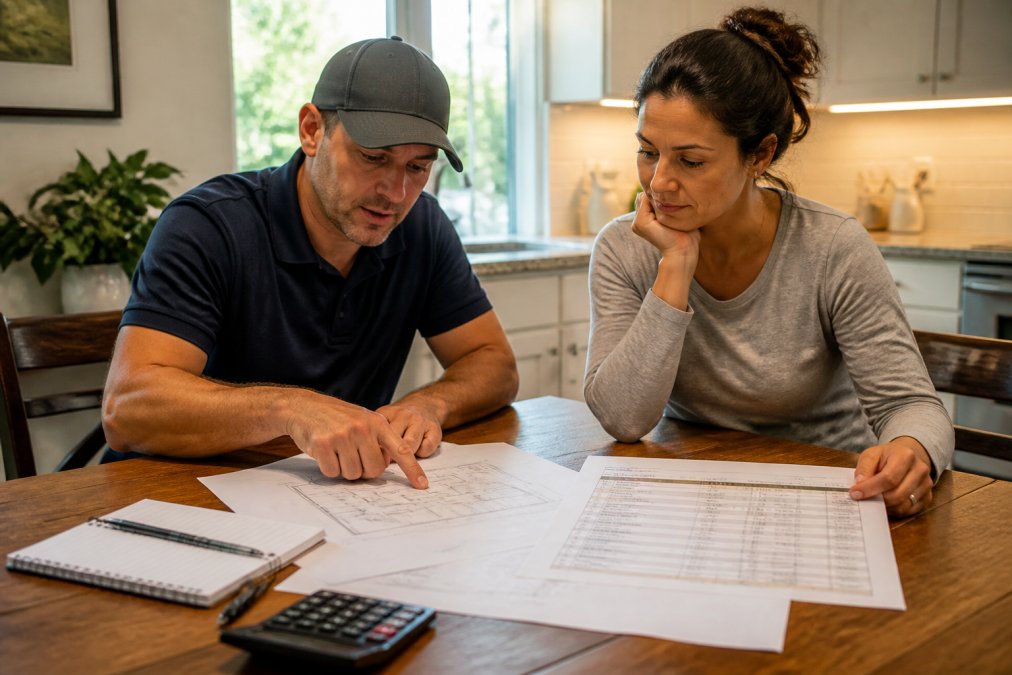
Break costs into categories: labor, materials, permits, and contingency. This granular breakdown forces you to think through every expense and gives you visibility into where money is going. Labor often represents 40-60 percent of total project cost, so get specific quotes that itemize labor rates, estimated hours per task, and any overtime fees (bls.gov).
Work with your contractor to establish design specifications before construction begins. Selecting finishes, fixtures, and materials in advance prevents rushed, expensive decisions made on site.
Step 2: Set a Realistic Remodeling Contingency Fund Percentage
A remodeling contingency fund is insurance against genuine surprises like structural damage, code violations, or unforeseen site conditions.
For projects in older homes with unknown structural conditions, a contingency fund of 15-20 percent is standard (nahb.org). For newer homes with straightforward scopes, 10-15 percent is often sufficient. For additions or structural work, lean toward the higher end.
Set the contingency fund before construction starts and protect it. Treat it as truly contingent, reserved only for genuine unexpected costs, not for scope creep or upgrade impulses. If your project budget is $80,000, a 15 percent contingency is $12,000, write that number down and commit to it. When the contractor discovers rotted framing or finds that existing electrical doesn’t meet current code, you have a designated fund to address it without derailing the entire budget.
Communicate the contingency amount to your contractor upfront so they understand it exists for legitimate surprises, not for scope changes or design upgrades.
Step 3: Establish a Written Contract with Fixed-Price Terms
A written contract is non-negotiable. It protects both you and your contractor by establishing clear terms, scope, timeline, and payment structure.
The contract should specify the project scope in detail, list materials by brand and model, define the timeline with start and end dates, and detail the payment schedule. For budget protection, a fixed-price contract is superior to time and materials pricing. A fixed-price contract locks the total cost (excluding legitimate change orders), and the contractor assumes the risk of cost overruns due to inefficiency.
Include a clause that requires written authorization for any work outside the original scope. Specify the dispute resolution process so small disagreements don’t become expensive problems.
Step 4: Ask the Right Questions to Ask a Contractor Before Signing a Contract
Before signing, understand your contractor’s experience, process, and approach to managing projects like yours.
Ask about their experience with similar projects, their pre-construction planning process, and how they handle change orders. Request references from homeowners whose projects were completed on budget and on schedule, and call them to verify. Ask about their project management approach: how do they track expenses and provide budget updates? Ask about their subcontractor relationships and what happens if the project runs over timeline.
Step 5: How to Manage Change Orders During Construction
Change orders are inevitable in remodeling. The key is managing them disciplined so they don’t derail your budget.
Establish a change order process upfront: any work outside the original contract scope requires a written change order specifying what’s being added, the cost, and timeline impact. Evaluate each change order carefully, is it a legitimate unexpected condition or scope creep? Legitimate unexpected conditions come from your contingency fund. Scope creep comes from discretionary budget or doesn’t happen.
Ask the contractor to provide options for addressing unexpected issues. Document everything: keep copies of every change order, approval, and cost estimate. Set a change order approval limit in advance and track cumulative change order costs to prevent incremental additions from exceeding your contingency fund.
Step 6: Track Expenses and Monitor Budget Variance Throughout the Project
Budget control continues throughout construction. Active expense tracking catches problems early, when they’re still manageable.

Request detailed invoices from your contractor and subcontractors with itemization of work performed and materials used. Create a spreadsheet tracking actual costs against budgeted costs by category. Review the variance monthly, if a category is running 10 percent over budget, investigate why. Flag budget variance early so you have options to adjust scope or find cost savings.
Maintain regular communication with your contractor about budget status. A good contractor will proactively flag potential overages. Create a decision log documenting every change, approval, and budget decision made during the project.
Common Mistakes to Avoid
Starting without a detailed plan. Rushing into construction with a vague idea guarantees budget overruns. Detailed planning prevents expensive mistakes during construction.
Underestimating contingency. A 5 percent contingency sounds reasonable until structural damage costs 8 percent of your budget. Older homes almost always have surprises.
Making decisions during construction. Choosing finishes on site under time pressure almost always results in higher costs. Make decisions during planning when you have time to shop around.
Ignoring change orders. Approving change orders verbally without documentation creates disagreement about what was approved. Every change order must be documented in writing.
Not tracking expenses. If you’re not monitoring actual costs against budget regularly, you won’t know you’re over budget until the project is complete. Monthly budget reviews are essential.
Hiring based on price alone. The lowest bid often comes from a contractor who underestimated the scope. Evaluate contractors on experience, process, references, and communication.
Vague contract language. A contract that says “kitchen remodel, $50,000” invites disputes. Specific language protects both you and the contractor.
Scope creep. Every addition, no matter how small, should be documented and approved as a change order.
Poor communication. Projects where homeowner and contractor communicate regularly and address issues promptly tend to stay on budget.
Deferring difficult decisions. Deciding to “figure it out later” guarantees it will be figured out under pressure during construction, at higher cost.
Avoiding remodeling budget overruns comes down to planning rigorously, contracting clearly, and managing actively throughout construction. Contractors who deliver projects on budget invest time in understanding the scope, establishing clear terms, and monitoring progress continuously.
Remodeling Pros helps homeowners in Northeast Florida navigate complex structural projects with precision planning and detailed cost management. Our 3D design process clarifies the scope before construction starts, and our project management approach tracks every expense against budget. If you’re planning a major remodel or addition, get a quote from Remodeling Pros and see how detailed planning protects your investment.
Frequently Asked Questions
What is a realistic contingency fund percentage for a home remodel?
A contingency fund of 10-20% of your total project budget is standard for most residential remodels. For projects between $20,000 and $300,000, this creates a financial buffer for unexpected structural issues, material price changes, and unforeseen code requirements. Larger, more complex additions or homes with older construction may warrant 20-25%. This contingency protects you from the most common cost overruns without inflating your initial budget unnecessarily.
Why do remodeling projects go over budget?
Budget overruns typically stem from scope creep, hidden structural issues discovered during demolition, design changes, permit delays, and material procurement challenges. Psychological triggers, like the temptation to upgrade finishes mid-project or the difficulty of saying no to contractor suggestions, also drive costs higher. Many homeowners underestimate labor costs and the impact of change orders. Working with a contractor who uses detailed pre-construction planning and 3D design can catch many of these issues before work begins, significantly reducing surprises.
How can I negotiate remodeling costs with a contractor?
Negotiate costs upfront through a detailed, written contract with fixed-price terms for the scope of work. Request itemized cost breakdowns for labor, materials, and subcontractors. Get multiple bids and ask contractors how they handle change orders and permit fees. Establish clear decision deadlines for finish selections so delays don’t inflate labor costs. Use vendor communication and site inspections to identify potential issues early. A contractor using 3D rendering and pre-construction planning can provide more accurate estimates, giving you better negotiating power.
What are the most common hidden costs in home renovations?
Hidden costs include permit fees, structural repairs uncovered during demolition, asbestos or mold remediation, electrical and plumbing upgrades required by code, subcontractor fees not disclosed upfront, material price increases during the project timeline, and extended labor costs from delays. Older homes are particularly vulnerable to unexpected repairs. Mitigation strategies include a thorough site inspection before contracting, a robust contingency fund, and working with an experienced general contractor who has encountered similar issues and can estimate realistically.