Table of Contents
- Why Verifying Contractor Insurance Matters
- How to Verify Contractor License in Florida
- Florida Contractor Workers’ Compensation Verification
- Understanding the Contractor Certificate of Insurance
- How to Verify an Insurance Company in Florida
- What to Do If Coverage Cannot Be Verified
- Creating Your Verification Checklist
- Frequently Asked Questions
Last Updated: October 14, 2026
Why Verifying Contractor Insurance Matters
Before hiring any contractor in Florida, you must verify contractor insurance, it is non-negotiable. An uninsured or underinsured contractor puts your home, your family, and your finances at serious risk. If something goes wrong on your property, you could face expensive liability claims, property damage costs, or legal disputes that drain your savings.
Here’s what’s at stake:
- Injury on your property: If a worker gets hurt and the contractor has no workers’ compensation coverage, you may be liable
- Damage to your home: Without general liability insurance, you pay for accidents the contractor causes
- Unfinished work: If the contractor goes out of business, you have no recourse without proper bonding or insurance documentation
- Legal complications: Disputes escalate quickly without clear insurance records to reference
Verification takes 15 minutes. The protection it provides is worth far more.
How to Verify Contractor License in Florida
Florida requires most contractors to hold an active state license. Your first step is confirming the contractor’s license is current and in good standing.
Step 1: Visit the Florida Department of Business and Professional Regulation (DBPR) website. Go to the official licensing portal at myfloridalicense.com.
Step 2: Search by contractor name or license number. Enter the contractor’s business name or their license number. The search returns their license status instantly.
Step 3: Review the license details. Check these critical items:
- License status: Must show “Active” or “Current”
- License type: Confirm it matches the work they’re doing (General Contractor, Building Contractor, Roofing Contractor, etc.)
- Expiration date: Verify the license hasn’t expired or is about to expire
- Disciplinary history: Note any complaints, violations, or enforcement actions listed
- Authorized lines of business: Confirm they’re licensed for the specific work you need
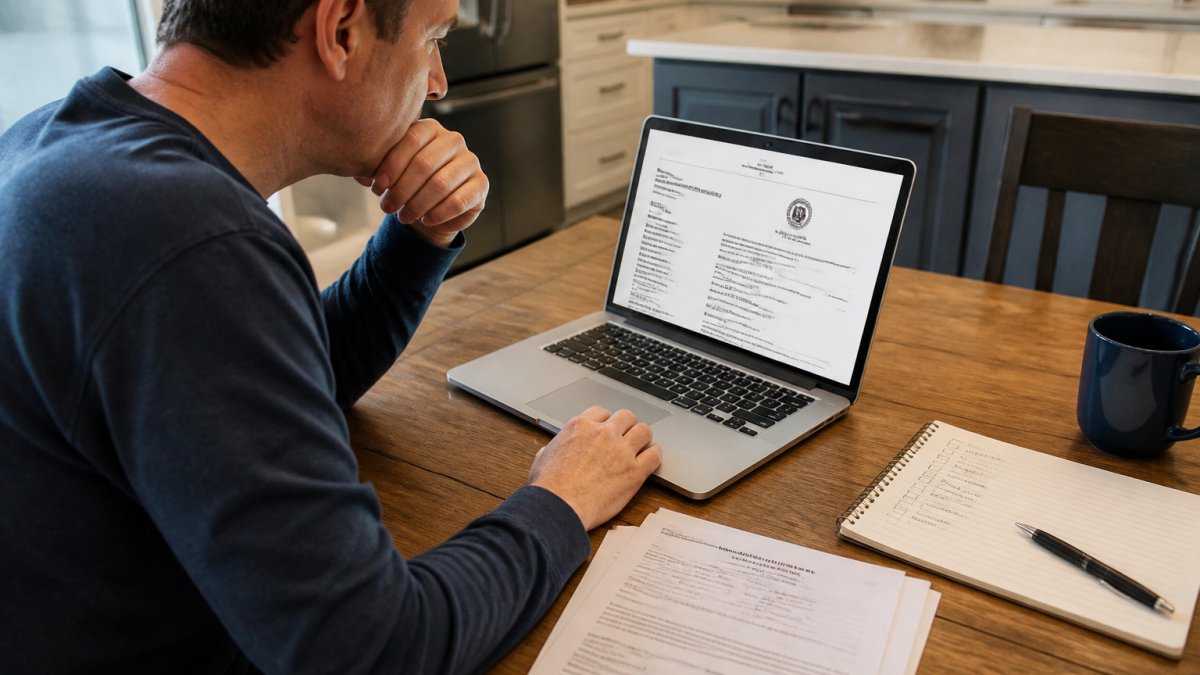
Step 4: Call the DBPR directly if anything seems unclear. Their consumer hotline can answer questions about a contractor’s standing. A legitimate contractor won’t mind you double-checking.
Ask the contractor directly for their license number before you search. If they hesitate or can’t provide it, that’s a red flag. Licensed contractors carry this information proudly.
Florida Contractor Workers’ Compensation Verification
Workers’ compensation is the coverage most likely to leave a homeowner exposed, because the rules are more nuanced than most people assume.
Who is required to carry it. In construction, a business with one or more employees, including the owner if the business is a corporation or LLC, generally must carry workers’ compensation coverage. Sole proprietors and partners in a partnership may be able to claim an exemption, but the exemption must be filed with the state and is not automatic (Home Page).
Step 1: Ask for proof of coverage. To verify contractor insurance, request either a Certificate of Insurance showing workers’ compensation or a Proof of Coverage document.
Step 3: Confirm the coverage dates span your project. A policy that expires in three weeks does not protect you on a three-month remodel.
Step 4: Match the named insured to the contractor. The policyholder name must match the business name on the license and the contract.
Step 5: Check exemption status if the contractor claims one. If the contractor says they are exempt, ask for the state-issued exemption certificate number and verify it through the same state portal.
A contractor claiming exemption because they “have no employees” still needs to provide written proof of that exemption from the state. Do not accept a verbal claim. If they cannot produce the certificate, treat the coverage as unverified.
What to do if coverage cannot be verified:
- Pause the project. Do not let work begin or continue until coverage is confirmed.
- Request updated proof in writing. Ask for a current certificate or Proof of Coverage document with dates that cover the full project.
- Contact the insurer directly using contact details you sourced independently, not from the certificate.
- Document everything. Keep dated notes of what you requested, what you received, and what the insurer confirmed. If a dispute arises later, this record matters.
- Walk away if the contractor stalls. A contractor who cannot produce proof of coverage within a day or two is either uninsured or disorganized. Neither is a good sign for a project on your home.
Workers’ compensation verification is a two-part check: confirm the policy is active through the state’s Proof of Coverage database, and confirm any claimed exemption through the same portal. A certificate alone does not close the loop.
Understanding the Contractor Certificate of Insurance
A Certificate of Insurance (COI) is a one-page summary issued by an insurance company or its authorized agent. It is not the policy itself. It is evidence that a policy exists on the date the certificate was printed, nothing more.
What a COI should show:
- Named insured: The exact legal business name of the contractor, matching the name on their license and your contract
- Insurer name and NAIC number: The carrier writing the policy, plus its five-digit NAIC company code
- Policy numbers and effective dates: Separate entries for general liability and workers’ compensation, each with its own start and end date
- Coverage limits: Per-occurrence and aggregate limits for general liability; part one and part two limits for workers’ compensation
- Certificate holder block: Where your name or property address appears if you have been added as an additional insured
- Authorized signature: The name of the agent or broker who issued it, with contact information
Why the certificate alone is not enough. Certificates are easy to alter, and they go stale the moment a policy is canceled for nonpayment. A contractor can hand you a COI on Monday, miss a premium payment on Tuesday, and the policy can be canceled mid-project. The certificate you are holding still looks valid.
How to validate a COI directly. The unique angle here is that you do not have to take the document at face value. You can confirm it with the source:
- Pull the agent or broker contact information yourself. Do not call the phone number printed on the COI, that number could belong to anyone. Instead, look up the agency by name through the state’s insurance agent and agency lookup, or search the insurer’s own website for a verified branch or agent listing.
- Ask the insurer to confirm four things: the named insured, the policy number, the effective dates, and whether the policy is currently in force. A legitimate carrier or agent will confirm coverage status without disclosing policy details.
- Ask about cancellation notice. Request that you be listed as a certificate holder so the insurer is contractually obligated to notify you if the policy is canceled or non-renewed before your project ends. Not every carrier will do this for residential work, but it is worth asking.
- Match the named insured to the contract. The name on the policy must match the entity you are signing with. If the COI lists “ABC Construction LLC” but your contract is with “John Smith,” you have a coverage gap.
Red flags on a COI:
- Policy dates that do not span your full project timeline
- Coverage limits far below what comparable work in your area requires
- An insurer you cannot find in the state’s company search
- Handwritten entries, mismatched fonts, or photocopies of photocopies
- No agent name, no phone number, or a phone number that routes to the contractor
- A named insured that does not match the license or the contract
Request the COI at least one week before work begins, and re-request it if the project runs past the policy expiration date. If the contractor cannot produce a current certificate, do not hire them.
A COI is a snapshot, not a guarantee. Always confirm the policy is still active by contacting the insurer or agent through contact details you sourced independently, never through the number printed on the certificate.
How to Verify an Insurance Company in Florida
Just because a contractor has a COI doesn’t mean the insurance company is legitimate.
Step 1: Visit the Florida Department of Financial Services (DFS) website. Go to fldfs.com and use their “Company Search” tool under insurance licensing.
Step 2: Search for the insurance company by name. Enter the insurer’s name exactly as it appears on the COI.
Step 3: Confirm the company is “authorized” in Florida. The search results should show the company is licensed and in good standing.
Step 4: Check the company’s complaint history. The DFS database includes consumer complaints.
If the insurance company doesn’t appear in Florida’s database, the COI is worthless. The contractor may have used a fake or out-of-state insurer. Do not proceed.
An insurance company licensed in another state is not enough. Florida-authorized companies are the only ones that guarantee payment if a claim is filed on your property.
What to Do If Coverage Cannot Be Verified
Sometimes you’ll search and find no coverage, expired coverage, or incomplete information. Here’s how to handle it.
If the contractor has no license:
Do not hire them. An unlicensed contractor in Florida is operating illegally.
If the workers’ compensation coverage is expired or missing:
Ask the contractor to provide proof of renewal or a current policy before work starts.
If the insurance company is not authorized in Florida:
Ask the contractor to switch to a Florida-authorized insurer. If they refuse, walk away.
If the COI coverage limits are too low for your project:
Negotiate higher limits as a contract requirement.
If the contractor is evasive or defensive about verification:
That’s a major red flag. Legitimate contractors expect and welcome verification. Evasion suggests they’re hiding something.
Creating Your Verification Checklist
Use this checklist to organize your verification process. Print it, fill it out, and keep it with your contract paperwork.
| Verification Step | Status | Notes |
|---|---|---|
| Contractor name and license number obtained | ☐ | |
| License searched on DBPR myfloridalicense.com | ☐ | Status: Active/Expired? |
| License type matches project scope | ☐ | License type: _____ |
| No disciplinary history or violations found | ☐ | Any violations listed? |
| COI requested from contractor | ☐ | Date received: _____ |
| General liability coverage verified | ☐ | Coverage limit: $_____ |
| Coverage dates include full project timeline | ☐ | Start: ___ End: ___ |
| Workers’ compensation coverage verified | ☐ | Active/Exempt? |
| Insurance company authorized in Florida | ☐ | Insurer name: _____ |
| Contractor added as certificate holder | ☐ | Your name listed? |
| All documents filed and accessible | ☐ | Location: _____ |
Print this checklist before you meet with contractors. Review it with each one. A contractor who hesitates or refuses to complete any of these steps is not worth hiring.
Frequently Asked Questions
How do I verify if a contractor has valid insurance in Florida?
Request a Certificate of Insurance directly from the contractor and verify the policy dates, coverage limits, and insurer name. Then contact the insurance company listed on the certificate to confirm the policy is active. You can also use the Florida Department of Business and Professional Regulation (DBPR) licensing portal to verify the contractor’s license status. Cross-reference the contractor’s business name and license number to ensure they match the certificate of insurance.
What should I check on a contractor’s certificate of insurance?
Verify the policy dates are current and extend through your project completion. Check that general liability coverage is adequate for your project’s scope. For structural work, workers’ compensation coverage should be present with adequate limits. Confirm the contractor’s name matches their license and business registration. The certificate should list you as an additional insured if requested, and include the insurance company’s contact information for verification.
Do I need to verify a contractor’s workers’ compensation coverage?
Yes. Workers’ compensation is required for contractors with employees in Florida. You can verify coverage through the state’s workers’ compensation Proof of Coverage database using the contractor’s business name or license number. This protects you from liability if a worker is injured on your property. Even if the contractor claims to be a sole proprietor, confirm their status in the system. Missing or expired coverage is a major red flag that should disqualify the contractor.
What should I do if a contractor cannot provide proof of insurance?
Do not hire them. Uninsured contractors leave you personally liable for injuries, property damage, and liens on your home. If they claim they’re exempt (sole proprietor without employees), still verify this through the DBPR licensing portal and workers’ compensation database. Ask for written documentation of their exempt status. Request references from recent projects and confirm those homeowners had no issues. Consider this a serious warning sign and move to a licensed, insured contractor instead.
Hiring the right contractor protects your investment and your peace of mind. Verification isn’t just a safety step, it’s the foundation of a successful project. At Remodeling Pros, we’ve built our reputation on transparency and accountability. When you work with a contractor who welcomes verification and maintains current insurance and licensing, you’re setting yourself up for a smooth, professional experience. Get a quote from a contractor you trust, and always verify their credentials first.