Last Updated: November 23, 2026
Quick Summary
You save money on kitchen flooring by choosing a budget-friendly material like sheet vinyl or peel and stick tile, prepping the subfloor yourself where it is safe, and treating installation labor as the biggest line item you can control. Add 10% extra material for cuts and waste on a simple rectangular kitchen, and 15% for an L-shaped or galley layout.
- Vinyl is generally water-resistant and installs more quickly than tile, making it a common kitchen option.
- Peel and stick tiles use adhesive backing, so there is no underlayment and almost no tool cost.
- Standard laminate is only water-resistant, not waterproof, and swells when water gets into the seams.
- Check subfloor flatness with a 10-foot straightedge or long level before buying a single box.
- Most planks need a 1/4 to 3/8 inch expansion gap at walls, hidden under baseboard or shoe molding.
Table of Contents
- How can I save money on kitchen flooring?
- Cheap kitchen flooring vinyl: the lowest cost per square foot
- Peel and stick kitchen flooring: a realistic look at the savings
- The best waterproof flooring for kitchen budgets
- Kitchen floor ideas on a budget that still look expensive
- DIY installation, subfloor prep, and the mistakes that cost you
- Hidden costs: maintenance, subfloor repair, and resale value
- Planning your kitchen floor budget with a remodeling contractor
- Frequently Asked Questions
How can I save money on kitchen flooring?
You save money on kitchen flooring by choosing a budget-friendly material, prepping the subfloor yourself where it is safe, and treating installation labor as the biggest line item you can control. Homeowners can cut flooring costs by focusing on three levers: material, labor, and waste. This guide breaks down each one, from cheap kitchen flooring vinyl to peel and stick kitchen flooring, so you can plan a realistic number before you buy.
Where the real savings hide in a flooring budget
The biggest savings rarely come from the material itself. They come from what happens before and after the floor goes down.
- Material: the visible cost, and the one everyone fixates on
- Labor: often the largest single line, and the most negotiable
- Subfloor prep: the hidden cost that blows budgets
- Waste: the quiet 10% you pay for and never use
Most guides rank materials by sticker price and stop there. But a cheap floor installed over a bad subfloor will fail early, and a failed floor costs more than the upgrade you skipped. Price all four lines before you commit.
What flooring actually costs per square foot
Flooring cost per square foot depends on material, thickness, and whether you install it yourself. Pricing depends on material choice, product grade, and project scope, so request a quote from Remodeling Pros for current figures.
| Material | Typical Cost per Square Foot | DIY Friendly | Best For |
|---|---|---|---|
| Sheet vinyl | Lowest | Moderate | Tight budgets, fast installs |
| Peel and stick tiles | Low | High | Rentals, quick refreshes |
| Vinyl plank | Low to mid | High | Busy kitchens, moisture |
| Laminate | Low to mid | High | Warm look on a budget |
| Porcelain tile | Mid to high | Low | Long-term durability |
For a wider view of what a full remodel runs, our mid-range kitchen remodel cost guide puts flooring in context against cabinets and counters. Flooring is rarely the line that breaks a budget. Cabinets are.
Cheap kitchen flooring vinyl: the lowest cost per square foot
Vinyl flooring is a common option for kitchens. It is generally water-resistant and installs more quickly than tile.
Sheet vinyl vs. vinyl plank: which one wins on price
Sheet vinyl comes in wide rolls, so it can have fewer seams than other formats.
Vinyl plank, often sold as vinyl click flooring, costs a little more but brings real advantages:
- Floating floor install: planks click together over most existing floors
- Repair: you can replace a single damaged plank
- Look: it reads as wood or stone far better than sheet goods
Peel and stick kitchen flooring: a realistic look at the savings
Peel and stick kitchen flooring is an option for changing a kitchen floor, and it comes with trade-offs. These tiles use adhesive backing, so there is no underlayment and almost no tool cost.
The honest limits:
- Wear layer: thin, so heavy traffic dulls it faster
- Subfloor sensitivity: every bump telegraphs through
- Grout lines: fake grout lines collect dirt and look worn over time
A common mistake is skipping surface cleaning before you stick. Adhesive will not bond to grease or dust. Scrub with a degreaser, let it dry fully, then lay the tile.
The best waterproof flooring for kitchen budgets
Vinyl, in either sheet or plank form, is a common waterproof flooring choice for kitchens. Kitchens see spills, splashes, and dropped dishes. Waterproof matters more here than in any other room.
Waterproof options ranked by cost
- Sheet vinyl: lowest cost, fully waterproof, few seams
- Vinyl plank: low to mid cost, waterproof core, DIY friendly
- Peel and stick vinyl tile: lowest upfront, thinner wear layer
- Porcelain tile: highest cost, waterproof, needs pro install
- Laminate: budget-friendly, but only water-resistant, not waterproof
That last point trips people up. Standard laminate swells when water gets into the seams. If you want laminate flooring in a kitchen, look for a water-resistant core and wipe spills fast.
Kitchen floor ideas on a budget that still look expensive
You can get an expensive look on a small budget with the right pattern and layout choices. The trick is directing attention away from the material and toward the design.
- Large-format planks: wider planks read as higher-end
- Stenciled patterns: paint a plain floor with a stencil for a tile look
- Resurfacing existing floors: refinish instead of replace when the base is sound
- Warm grout colors: hide dirt and stretch the look of cheap tile
- Consistent baseboards: fresh trim makes any floor look finished
Painting or stenciling an existing floor is the sleeper move.
If resale value is on your mind, our guide to the best kitchen remodel upgrades for resale shows which changes actually pay back at sale.
DIY installation, subfloor prep, and the mistakes that cost you
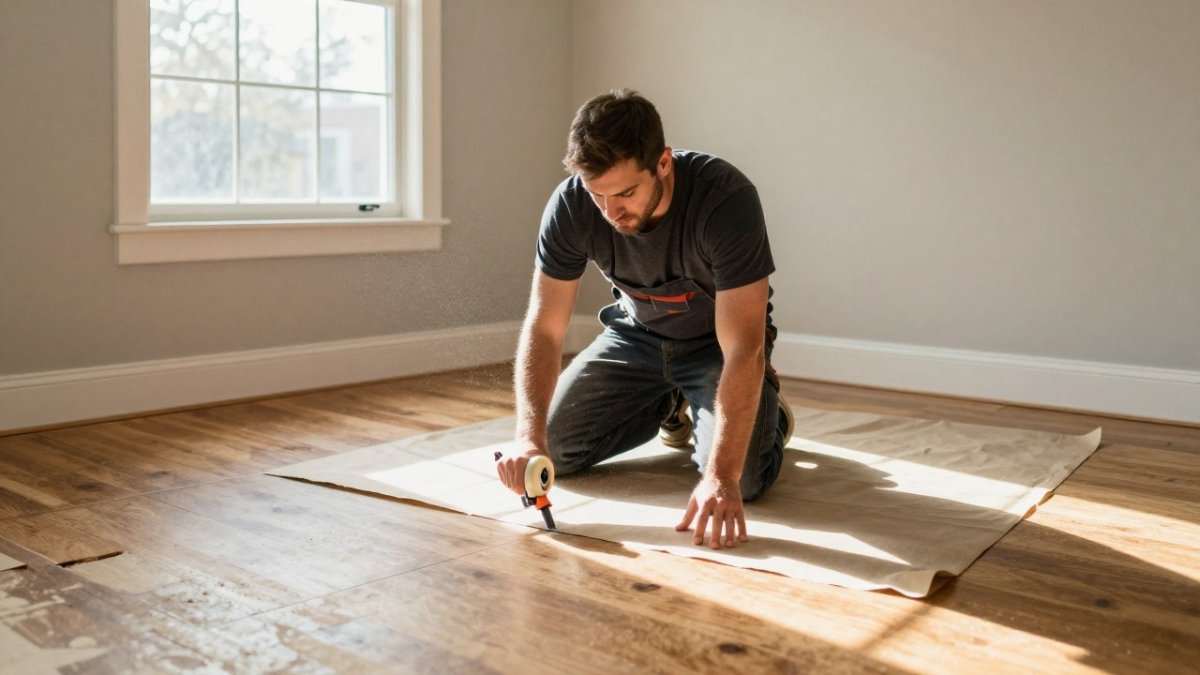
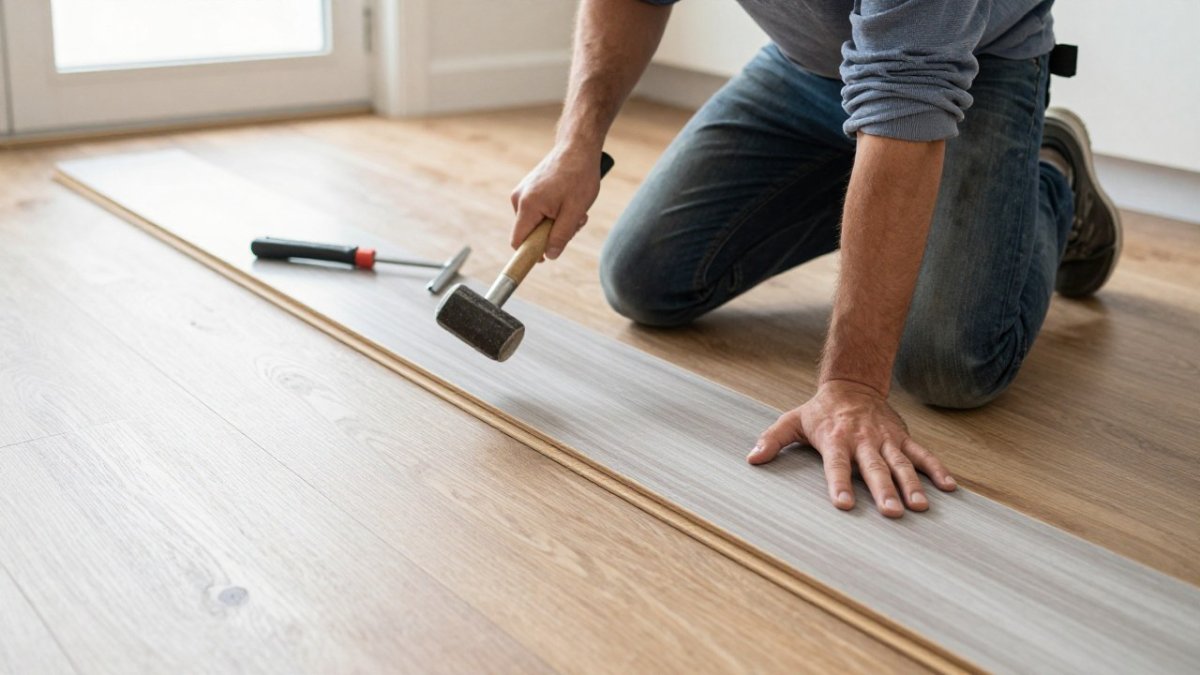
DIY installation saves the most money and carries the most risk. Labor is often the largest line in a flooring quote, and doing it yourself can cut that line hard, but only if the subfloor is right.
What “flat enough” actually means
Check flatness with a 10-foot straightedge or long level, sliding a coin or feeler gauge under the low spots. Mark high and low areas with painter’s tape before you buy a single box.
Subfloor repair on a budget: the realistic fixes
You do not need a contractor for every subfloor issue. The cheap fixes, in order of cost:
Moisture testing: the step that saves the whole job
Over a concrete slab, a simple plastic sheet test can help check for moisture before installation. Moisture under a floating floor can cause problems over time.
The mistakes that cost you the most
- Skipping moisture testing over a slab
- Laying planks over debris, high nails, or old adhesive residue
- Ignoring the expansion gap at walls, most planks need 1/4 to 3/8 inch, hidden under baseboard or shoe molding
- Buying too little material: add 10% for cuts and waste on a simple rectangular kitchen, 15% for an L-shaped or galley layout with lots of doorways
- Installing cabinets on top of a floating floor instead of around it
If the subfloor needs real repair, the layout is tricky, or you are installing tile, this is the point to bring in a pro. Our guide on how to choose a kitchen remodeling contractor covers what to ask before you hand over the install.
Hidden costs: maintenance, subfloor repair, and resale value
The cheapest floor up front is not always the cheapest over time. The real number is the five-year cost of ownership, purchase, installation, maintenance, and replacement, and that is where cheap materials separate from value materials.
The five-year cost of ownership, by material
- Sheet vinyl: $1-$3 per square foot installed. Expect 10-15 years of life with normal care. Maintenance is damp mopping and occasional deep cleaning. Five-year cost is essentially the install price plus cleaning supplies.
- Peel and stick vinyl tile: $1-$2 per square foot. Wear layer is thin, so heavy traffic dulls it in 3-5 years. Plan on replacement inside the five-year window in a busy kitchen, which roughly doubles the effective cost.
- Vinyl plank: $2-$5 per square foot. 15-20 year lifespan with a quality wear layer. Maintenance is sweeping and damp mopping; no waxing. The main risk is moisture under the planks if the subfloor was not tested.
- Laminate: $2-$4 per square foot. 10-15 years if kept dry. Water-resistant cores help, but standard laminate swells at the seams when water sits. Kitchen spills mean more vigilance than vinyl.
- Porcelain tile: $5-$12 per square foot installed. 30+ years. Grout needs sealing every few years, and a cracked tile is a real repair. The high upfront cost is offset by longevity, but only if you plan to stay.
Subfloor repair: the wildcard line item
If you find rot, movement, or active moisture, stop and fix it before the new floor goes down, installing over a failing subfloor guarantees you will pay for the floor twice.
Our guide on avoiding surprise renovation costs explains how to build that cushion into your plan.
Which cheap floors hurt resale value, and which are neutral
Buyers notice floors, and a cheap floor with lifting edges reads as a problem. Resale impact depends less on material than on installation and condition:
- Neutral to positive: well-installed vinyl plank, sheet vinyl in good condition, and clean tile. These read as cared-for and do not raise red flags.
- Neutral: laminate in good condition, as long as it is dry and flat.
- Negative: peel and stick with curling edges, visible fake grout lines that have collected dirt, and any floor with gaps, squeaks, or soft spots. These signal deferred maintenance and invite lowball offers.
Planning your kitchen floor budget with a remodeling contractor
A contractor helps you plan the whole budget, not just the floor, the difference between a floor that fits your kitchen and one that fights it.
When you plan your kitchen floor budget, slot flooring into the full picture. Cabinets, counters, and layout changes usually drive the total. Flooring is the piece you can often control. Our guide on how to plan a kitchen remodel budget walks through the full framework so flooring lands in the right place.
Remodeling Pros offers sophisticated 3D design, which helps you visualize a project before building. Its exclusive Last Day Breakthrough system keeps the original structure intact until the last moment, so you can keep using your home during construction. The team also offers expert guidance on what adds value to a home.
Flooring is one of the few kitchen costs you can genuinely control, but only if you plan material, labor, subfloor prep, and waste together. Remodeling Pros brings 3D design so you see the result first, the Last Day Breakthrough system so you stay in your home during the work, and expert guidance on which upgrades actually add value.
Frequently Asked Questions
Is peel-and-stick flooring suitable for a kitchen?
Yes, peel and stick kitchen flooring works in most kitchens as long as the subfloor is clean, flat, and dry before installation. It handles occasional splashes well, but standing water can work under the edges of loose tiles, so wipe spills quickly. Choose tiles with a wear layer rated for high-traffic areas, and expect to replace a tile or two over time.
Can I install kitchen flooring over an existing floor?
Sometimes. Floating floors like vinyl click flooring and laminate can often go over a sound, level hard surface, which cuts removal and disposal costs from your budget. You cannot install over carpet, and you should not go over a floor with soft spots, water damage, or more than one existing layer in most cases. Check the manufacturer’s rules first. Skipping proper subfloor preparation to save money usually leads to gaps, rocking planks, and a floor that fails early.
How much can I save by installing kitchen flooring myself?
Doing the install yourself removes installation labor from the bill, which is often a large share of a flooring project. The trade-off is risk: cutting errors add material waste, and subfloor preparation done wrong can ruin the whole floor. If your kitchen is small, square, and the subfloor is flat, DIY is a reasonable way to save money on kitchen flooring.
What is the best waterproof flooring for a kitchen on a budget?
Luxury vinyl plank, waterproof laminate, and sheet vinyl are common water-resistant flooring options for kitchens. All three tolerate spills and humidity better than hardwood or standard laminate. Look at the wear layer and the core material, not just the word waterproof on the box.